 |
Friday, 22 January 2016


Thursday, 21 January 2016
PLEASE SHARE THE NEWS ABOUT GUANTANAMO - SHUT DOWN THIS OBSCENE PLACE - THE WORLD CAN'T WAIT
FROM THE WORLD CAN'T WAIT


World Can't Wait | January 5, 2016
IN 2002, the Bush regime set up a primitive prison camp at the U.S. military base in Guantanamo Bay, Cuba. Over six years they held 776 men there without charges, using what they called “enhanced interrogation” and the rest of the world calls “torture.” Bush called these men “the worst of the worst,” though most had been turned in for $5,000 cash bounties the U.S. paid, and had no connection to attacks on the U.S. An international outcry brought about the release of more than 500 of the prisoners.
Torture is a war crime, and a crime against humanity.
International and U.S. law prohibit torture, under any and all circumstances, without exception. If we fail to hold our government and its officials accountable for the American torture state they have constructed, we are condoning that torture and it will continue to occur.
The systemic abuse witnessed at Guantanamo is sustained by a culture of impunity. High government officials responsible for wars of aggression and conspiracy to commit torture walk free, unrepentant and boldly advocating for more of the same.
Why is Guantanamo still open?
And what can we do to close it?
Evidence against some prisoners is tainted, usually because of a tortured confession. There is no legal way to get a conviction. Political calculation notwithstanding, in a free and just society, anyone detained by the government must be charged and given a fair trial, or released. And that won’t happen by the secret military tribunal system that President Obama has established to replace real justice.
The U.S. commander-in-chief has authority, independent of Congressional approval, to close the hated prison camp with the stroke of a pen. It’s up to us to make that happen.
On January 11, 2016, the U.S. torture camp at Guantanamo will have been open 14 years.
One of Obama’s first acts as president in 2008 was to order closure of Guantanamo within one year, leading most people to think the terrible practice of preemptive incarceration without trial is over. But it isn’t.
105 men are still held, 46 of whom are cleared for release. They suffer the Obama administration’s policy of indefinite detention. An unknown number of hunger strikers are being force-fed in violation of the United Nations Convention Against Torture.
The closure of Guantanamo Bay Prison Camp can’t wait. The abomination of U.S. torture must not only end; the rationale of “exceptionalism” — that American lives are worth more than others — must be repudiated.
Guantanamo: how will WE be judged?
Our government has done its best to hide the torture practiced at the experimental off-shore prison camp and forestall any attempts at accountability for the perpetrators and enablers of those crimes. But thanks to a courageous and ongoing hunger strike by prisoners, Obama was forced to condemn extrajudicial punishment.
Protestations of executive “my hands are tied” impotence are no longer plausible. It is up to us to demand closure of Guantanamo and repudiation of the lawlessness exhibited there.
When IGNORE–ance = death, silence is not an option
“The president knows that Guantanamo is wrong, legally and morally,” says Wells Dixon, senior attorney for the Center for Constitutional Rights, who has represented clients at Gitmo since 2005. “But the failure to ensure accountability for the sins of the prior administration is like trying to avoid treatment for mental illness with the hope that it will go away,” he says. “The more you ignore it, the more it comes back to haunt you.”
The President and Congress have responded to prisoner demands with callous disregard for basic legal and human rights. Murder by neglect... is this the end of the line? Will people living in the United States accept this version of history? Or will we step up to the task at hand and close down Guantanamo once and for all?
TORTURE + SILENCE = COMPLICITY! ACT NOW TO STOP TORTURE!
|
Showing the face of bigotry in Australia. A report on Australia's Islamophobia and statistics on bigotry among religions.
This report will provide interesting reading for Australia's inhabitants. It pinpoints how they feel about their Muslim neighbours.
For people of faith, or those interested in religion, the statistics on attitudes among faith communities is enlightening but not surprising.

For people of faith, or those interested in religion, the statistics on attitudes among faith communities is enlightening but not surprising.

|
Monday, 18 January 2016
Ballarat Rural Australians for Refugees are fundraising
for local asylum seekers and the Asylum Seekers Resource Centre (ASRC)
Music at The Brewery
Sunday 31 January 2016
from 2.30pm
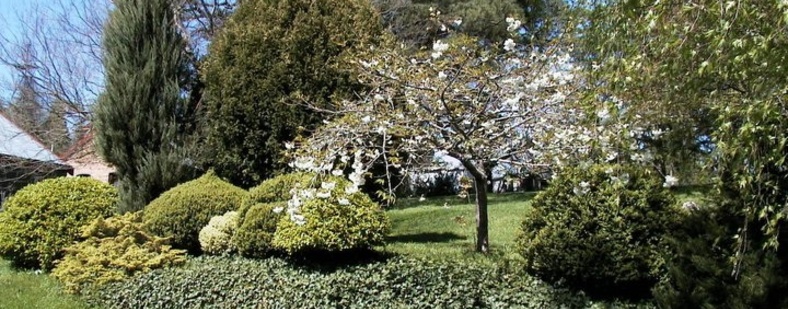
107 Yuille Street, Buninyong
near the Bunininyong Botanical Gardens

|
Monday, 11 January 2016
THE WISE PERSON BUILDS THE HOUSE UPON A ROCK - AUSTRALIA MAY HAVE BUILT ITS HOUSE ON CRUMBLING SAND
Trans-Pacific Partnership will barely benefit Australia, says World Bank report
January 11, 2016 - 6:15PM

Peter Martin
Economics Editor, The Age
Robb: TPP critics looking for 'gotcha moment'
Concerns over the power of multinationals in the TPP is 'fear-mongering that has been perpetuated for five years in ignorance' says Trade Minister Andrew Robb. Courtesy of ABC News 24.
Australia stands to gain almost nothing from the mega trade deal sealed with 11 other nations including United States, Japan, and Singapore, the first comprehensive economic analysis finds.
Prepared by staff from the World Bank, the study says the so-called Trans-Pacific Partnership would boost Australia's economy by just 0.7 per cent by the year 2030.
The annual boost to growth would be less than one half of one 10th of 1 per cent.
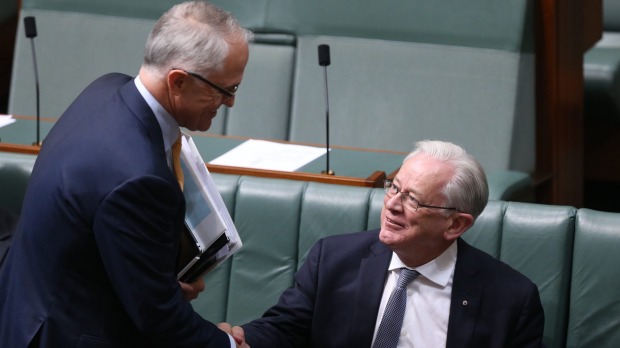
Prime Minister Malcolm Turnbull and Trade Minister Andrew Robb.
Photo: Andrew Meares
Other members of the TPP stand to benefit much more, according to the analysis. Vietnam's economy would be 10 per cent bigger by 2030, Malaysia's 8 per cent bigger, New Zealand's 3 per cent bigger, and Singapore's 3 per cent bigger.
The study explains that highly developed nations such as Australia are either relatively reliant on things other than trade for economic growth or are already fairly free of trade restrictions.
Australia and the United States benefit the least from the Trans-Pacific Partnership. The study says it would boost the US economy by only 0.4 per cent by 2030.
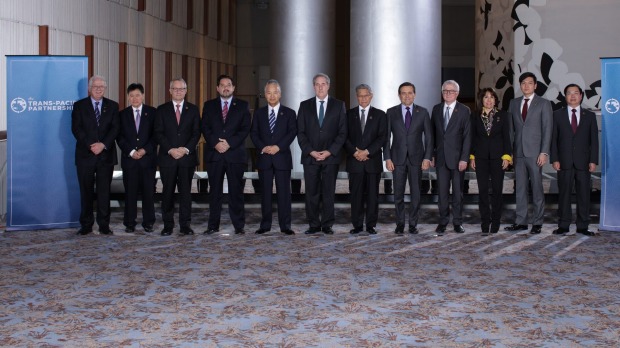
Signatories to the TPP include Australia, Brunei, Canada, Chile, Japan, Malaysia, Mexico, New Zealand, Peru, Singapore, the US and Vietnam.
Non-members would suffer as members directed trade to other members. The biggest loser would be Thailand, whose exports are set to fall 2 per cent while Vietnam's grow 30 per cent.
The TPP barely benefits Australia
The TPP barely benefits Australia
How much each of the 12 members of the Trans-Pacific Partnership will benefit from the agreement.
SOURCE: WORLD BANK
Since sealing the deal in October the Australian government has been reluctant to commission an economic analysis of its effects, turning down an offer from the Productivity Commission.
Prime Minister Malcolm Turnbull described the deal as a "gigantic foundation stone", saying it would deliver "more jobs, absolutely".
It opens up trade between members but makes trade more difficult with non-members through a process known as "cumulative rules of origin" where members lose privileges if they source inputs from countries outside the TPP.
The Productivity Commission has been strongly critical of the provisions saying that they turn so-called free trade agreements into "preferential" agreements.
The Partnership also requires members to sign up to tough intellectual property provisions and to submit to investor-state dispute settlement procedures administered by outside tribunals.
World Trade Online says the negotiating parties are planning to sign the agreement in New Zealand on February 4. It says Chile has confirmed the date and some trade ministers have already made arrangements to travel to Auckland, but it says New Zealand has yet to issue formal invitations.
The deal will not come into place until it has been ratified by at least 6 of the 12 signatories representing 85 per cent of their combined gross domestic product. Before ratifying the deal Australia has to table it in Parliament for 20 joint sitting days and consider a report from the joint standing committee on treaties.
Labor has yet to announce its position on the partnership. It has said previously that it opposes investor-state dispute settlement procedures but agreed to them in the Korea and China free trade agreements.
A spokeswoman for Trade Minister Andrew Robb said the agreement would deliver enormous benefits by driving integration in the fast-growing Asia-Pacific, and establishing one set of trading rules across 12 countries.
"The World Bank report demonstrates that all 12 member countries – representing around 40 per cent of global GDP – will experience economic growth and increased exports," she said.
Peter Martin is economics editor of The Age.
Follow Peter Martin on Facebook |
Friday, 8 January 2016
Neel, Sugaa and kids are in imminent danger of deportation. Please join the Ballarat people supporting them. Details below.

The family above are known to many Ballaratians. They have charmed us. They have lived peacefully among us raising their children - in spite of the difficulties placed in their way by the Australian Government.
There was a time when Neel worked. But the Australian Government denied him work rights. Since then, the Ballarat community has provided support for the family - and was pleased to do so. The politicians and bureaucrats involved in the forthcoming deportation don't know this family. We on the ground in Ballarat do. We want Neel and Sugaa and the kids here among us. Please come and support the family --- and let the powers-that-be know that they are doing something wrong if they deport them.
|
American-style food stamps on the way for Australian pensioners? A bit rich from a very rich Prime Minister?
Cross-posted with Advocacy

One-third of Australian pensioners live in poverty:
OECD report
January 8, 2016 - 9:10AM
Social Affairs Reporter
More than one-third of Australian pensioners are living below the poverty line, making the country among the worst performers in the world for the financial security of older people.
The findings of the OECD report, Pensions at a Glance 2015, compared Australia to 33 other countries.
Australia was ranked second lowest on social equity, with 36 per cent of pensioners living below the poverty line, which the report defined as half the relevant country's median household income.

One-third of Australian pensioners live in poverty, according to a report by the OECD.
Photo: Greg Newington
Australian pensioners fared better than their counterparts in South Korea, where 50 per cent live below the poverty line but performed poorly against the OECD average of 12.6 per cent.
The report, released last month, found the Australian government contributes less to old-age benefits than other OECD countries. The Australian government spends 3.5 per cent of GDP on the pension, below the OECD average of 7.9 per cent.
The findings are backed up by the Global Age Watch Index 2015 report card which rates countries by how well their older populations are faring. It ranked Australia lowest in its region on income security, due to the high rate of old age poverty and pension coverage which is below the regional average.
Paul Versteege , senior research and advocacy adviser with the Combined Pensioner and Superannuants Association, said the base Australian pension rate was low compared to median household incomes.
"There are huge discrepancies among retirees in various countries," he said.
"There are huge discrepancies among retirees in various countries," he said.
"In Australia there is quite a large group that has to subsist on the age pension as its only source of income. In spite of pension reform and recent increases to the pension, the base pension is still quite low for singles."
The annual payment for a single person is about $22,000 and $34,000 for a couple, with 2.25 million Australians claiming the pension.
Council on the Ageing chief executive Ian Yates said the report challenged perceptions that the entitlement was too high.
"Claims that the age pension is somehow too extravagant and unsustainable do not bear out," he said.
"We have always argued for progressive improvements to the pension but at the moment an increase to the pension is highly unlikely and more focus ought to go towards building superannuation contributions."
Chief executive of Vision Super Stephen Rowe said he was "staggered" by the findings of the OECD report, saying it painted a bleak picture for many older Australians.
"Are we generous enough with the pension? I don't think so."
He said that Australians retiring now have not received the full benefit of compulsory superannuation contributions, introduced in 1992, but were grappling with rising living costs.
"The basic cost of living in Australia is quite high, compared with some other OECD countries," Mr Rowe said.
Chief executive of National Seniors Michael O'Neill said the pension had gone backwards in real terms and many older people had not accumulated enough superannuation to supplement the benefit.
"In terms of sustainability, the report confirms that Australia spends substantially less than the OECD average on pensions," he said.
"In fact, our pension spend has dropped and plateaued since 2000. Against other countries, our proportion of pensioners living below the poverty line is startling."
Read more: http://www.theage.com.au/national/onethird-of-australian-pensioners-live-in-poverty-oecd-report-20160106-gm0uno#ixzz3wbUL4jxn
Follow us: @theage on Twitter | theageAustralia on Facebook
Read more: http://www.theage.com.au/national/onethird-of-australian-pensioners-live-in-poverty-oecd-report-20160106-gm0uno#ixzz3wbUL4jxn
Follow us: @theage on Twitter | theageAustralia on Facebook
|
Wednesday, 30 December 2015
Women's history: skillbuilding, work experience and a lifetime with shorthand - Pitman's and Gregg's
I am publishing this post because it is a look back into women's history and experience.
It has had thousands of views.
Do you remember learning pitmans shorthand?
Posted by Starts at 60 on Monday, 28 December 2015


|
Subscribe to:
Posts (Atom)