Showing posts with label Science. Show all posts

Tuesday, 22 October 2013

Here is an excerpt of an article by Bronwyn Lay published in Eureka Street.  Bronwyn is the daughter of my good friend, Margaret Lay.

Bushfires demand response-ability
Bronwyn Lay |  22 October 2013
Flames


I've never felt the earth move but have sniffed smoke, ashes and the aftermath of bushfires. The fright of inferno is akin to the world being taken away in an instant. It makes bodies tremble and language vanish. In front of violent nature, who are we but helpless and mute?
In bushfires, tsunamis and earthquakes, our relationship to the 'natural' world comes at us like an alive nightmare, and hurts. The natural world might not possess emotions like anger and revenge, but asks violent questions about meaning and action and responsibility. Many ask us to draw a line in our mourning, and only think about the humans. This is repression, for on such occasions humans and nature are bound in a dangerous dance.

In Lisbon 1755 the Western world changed direction. The ground literally moved as the biggest earthquake recorded in Western history hit the Portuguese coast and decimated Lisbon. A tsunami and fires followed. It was All Saints day and many people were at Mass when the earthquake hit. The monarchy fled to the hills to live as nomads, and thousands died.

Monday, 18 March 2013

Pharmaceuticals: cost, choice, medical collusion, adverse reactions in patients


I have written to Dan and the letter is set out below.  I would love to hear from others with similar experiences.

~~~~~~~~~
Dear Dan,

Would have liked to submit this as a comment on your article in The Age but could not find somewhere to do it.  That's why I am writing to you as author of the article.

I am an Aged Pensioner with a Health Card.  When I go to the chemist to get a prescription filled, I am asked whether I am happy to have a generic brand.  I always agree to generics.

Q:  Is this me doing something for the Federal Budget or does it not make one iota of difference?

My understanding is that in being offered a generic, I am being asked to accept a product which is in the same pharmaceutical class as that prescribed by my medical practitioner.

Q:  Is this correct?

I have grave distrust for pharmaceutical companies.  From my research on the internet, I understand that major pharmaceutical corporations are not allocating funds to research as well they might considering the large profits accruing from some of their best-selling drugs.  Instead, the PCs  look for other uses for their drugs.  

As well, because of collusion between medical practitioners and pharmaceutical corporations, virtually no attention is made to adverse reactions to pharmaceuticals in patients.  As an instance of this, I give you Lipitor manufactured by Pfizer.  I was taking Lipitor and other medications including nutrition supplements (some of these prescribed by my GP).  I was 66 years of age at the time.  I am 69 this year. I was most unwell and going downhill fast.  I thought to myself: I am on all these medications which, supposedly, are to make me well.  I was so unwell that I was on a walking stick.  Too reach out to turn a light switch on and off hurt.  I could not put my bra on in the time-honoured way.  It was too painful.  My shoulders hurt so much.  I had to fasten my bra at the front and then twist and turn to get it on correctly.  

I made a decision - without telling my GP.  I went off all medications - even vitamin pills.  

I sent the list of my medications to a pharmacist I knew.  He emailed back and said: I think it's the statin.  The statin was Lipitor.  After a few days without my medications, I began to feel better.  After a week, I was becoming markedly better and continue to be so.  I gradually re-introduced everything except the Lipitor.  Things remained OK - so, clearly, no culprits there. Definitely, the statin!  

After a month, I went to my GP and told her.  Oh, yes, she said, you can get a few tweaks and twinges on Lipitor.  I have refused Lipitor ever since.  This drives whoever is my GP at the time nuts!  Could tell you a few more stories about medicos and statins but you get the drift.  

There is a reason I have taken time to explain this experience.  That is the unscientific attitudes of the medical profession and their collusion with pharmaceutical companies.  You see, there is nowhere that I have been able to find - and I have searched and asked - somewhere to report adverse reactions to pharmaceuticals.  One GP who I complained to about this said: That's because we already know the contraindications.  My response was: Yes, you may know the contraindications but you don't have any data on how many contraindications to pharmaceuticals there are in Australia; whether the numbers are going up and down; their dispersion by geography, gender, age etc.  

Q:  Can you do a story on the this topic? 

Lipitor is not the only pharmaceutical to which I have adverse reaction.  The other is an antibiotic called Macrodantin.  Because of this medication, I ended up hospitalised with asymptomatic pneumonia (otherwise known as Walking Pneumonia because it doesn't have the same painful symptoms as ordinary Pneumonia). When I got out of hospital and recovered after this most debilitating illness, I looked up on the product site the contraindications for Macrodantin.  Turns out that one of the obscure reactions is Walking Pneumonia - one of the SARS group.  On admission to the hospital, I mentioned that I felt it may be an adverse reaction to Macrodantin.  No one discussed this with me.  No one came back and said we researched this and we found out that what you are suffering could be an adverse reaction to the drug.  In short, no one wants to know. Why?  In the absence of any other reason that I can think of, I consider it is because of collusion between medicos and pharmaceutical companies.  I would not be surprised to find similar collusion between governments and the aforesaid pharmaceutical companies.

I mentioned that I am an Aged Pensioner.  I have formed the view, based on my adverse experiences, that - as far as pharmaceutical companies are concerned - the aged and the chronically ill are repeat business; the same sort of repeat business that gambling, alcohol, and tobacco produce with the exception that the doorway to this repeat business is a university educated medical practitioner.  

I have described to you adverse reactions to two drugs.  You could also investigate the repeat business of anti-depressant drugs such as Effexor.  I am pleased that these drugs are there to help.  I have a family member who has been on Effexor for years.  She had tried to get off the drug and ended up hospitalised.  Last year she eventually did it - with the support of a helpful partner and a helpful website who gave a strict regimen for how to do it.  As the family member said, getting on Effexor is easy.  Try getting off!  Repeat business you see.  

Most ordinary citizens don't seek out prescription drugs to abuse.  People are actually abused by professional collusion.  One of the factors, I believe, is that such professionals forget that they are in professions based on science.  In science - even sociology which is part of my uni degree - one learns about the bell curve.  It seems that our medicos have forgotten this little fact: a bell curve has a lot of numbers at the top (where most people are at) but there are smaller numbers either side (the exceptions to the majority rule).  Medicos that I have struck seem to forget there are exceptions.  That people like me exist.

Back to the Grattan Institute. I have a suggestion.  If govt is to do precisely what GI want and save billions, then I want a Consumers Medical/Pharmaceutical Research Institute established and managed by government - not the medical or pharmaceutical institutes or corporations - which is based on the experience of consumers in the medico-pharma industry.  Now that might prove to be a good return on investment!

Lastly, I would refer you to this program from ABC's Catalyst: http://www.abc.net.au/catalyst/stories/2981241.htm

I particularly love this quote from the Catalyst program:

Prof David Le Couteur 
One of the joys of geriatric medicine is stopping medications and seeing people get better. We have phoenixes that rise from the ashes in geriatric medicine unlike any other specialty. People who come in that are very unwell and by the simple intervention of stopping medications we see people get better.

Would love to hear from you, 
@DHarrisonAgeSMH, that you can do a Walkley Award winning story about all this.

Wednesday, 6 March 2013

Rode RAGE letter to DLP Senator John Madigan; Lord Monckton's cease and desist letter from the House of Lords; Climate Change; Greenhouse Emissions

Further to the post below this one, Tony Davidson has also written to the Victorian DLP Senator, John Madigan.  Here it is. Readers should note that the links in the letter at the numbered paras 5 and 6 as well as the third last para as published below have been inserted by Miss Eagle, the editor of The Network.  They were not included in the letter sent to Senator Madigan by Tony Davidson.

cid:image001.jpg@01CD487C.0F38FCF0
Dear Senator Madigan,
I am writing to you on behalf of the Rode R.A.G.E. (Ride Against Greenhouse Emissions) Team, a group of young people from the Ballarat area.  Many of whom will shortly be voting in their first Federal election, some too young to vote, but still very interested in politics, especially as it relates to the creation of a more sustainable and just world.
A group from our team has recently returned from our Khmer Rode RAGE  (www.roderage.com.au/khmer ) where we lived and worked in a Cambodian orphanage and a Thai wildlife sanctuary (we also visited the Hell Fire Pass Memorial to pay our respects and give thanks) where we witnessed firsthand the suffering being created, at least in part, by climate chaos.  We think that it is unfair that Australians are the biggest per capita emitters of greenhouse gases in the world, but that it is people in developing nations and wildlife who are paying the biggest and most immediate penalty for our pollution and we wanted to lend a physical hand and donate money that we had raised to help redress this unfairness.  We think it is “Un-Australian” to create a problem and expect someone else to suffer for it… this was reinforced to us at Hell Fire Pass.
Your website says that it is our job to make sure that you speak for us…. And so we write to you so that you may be able to do so, and thank you for the invitation and opportunity.
We have recently become aware that you and the DLP will be sponsoring a tour by “Lord” Monckton which will include Ballarat. We wouldn’t want to pre-empt what he might say, and we certainly hope that he has read some scientific literature since his last public comments and that he will be expressing his new found awareness of the overwhelming scientific consensus on the issue of man made climate change.
We also fully accept your comments in The Courier 4/11/12 that “everyone is entitled to their opinion” and that people “should play the issue and not the man”.  However we have some questions that we were hoping you could answer for us please:
1.      There are many people in the world who believe that humans can survive with only oxygen and no food or water…. Or that smoking doesn’t have any link to cancer ( issues which have comparable scientific consensus to that of man made climate change)  and in a plural society, they have the right to hold those views, but is it appropriate for community leaders and political parties endorse/sponsor forums for them to broadcast their views?
2.      In last year’s Courier you were quoted as saying that you didn’t know how much the DLP would spend on this tour…. Do you now know? And do you know where these funds have come from??
3.      You were also quoted as saying that you didn’t agree with everything he has to say…. Can you please clarify for us if you believe that human activities are impacting upon our climate in a way that results in more extreme weather events and thus results in loss of food production, property and life around the world??  And if so, do you believe that reducing our greenhouse emissions is a vital part of leaving a sustainable future for our children?
4.      Are you aware of the proposal from Beyond Zero Emissions (www.beyondzeroemissions.org) which seems to us to be a well researched proposal, constructed by credible experts as to how Australia could be producing zero emissions within 10 years.  In your view, are there any reasons why we can’t achieve this? Or why we wouldn’t want to achieve this??  You said that you speak for us…we would like you to please do everything within your power to make this happen.
5.      What are your thoughts on “Lord” Monckton continuing to use the title of “Lord” despite the cease and desist letter from the House of Lords?? Do you think the use of that title is giving undeserved credibility to his views?? Are you and the DLP happy for him to continue to use that title?
6.      In recent years, Australia (at this stage one of the least effected countries on the planet despite our massive per capita contribution to the problem) which has always had storms, droughts and floods….. has seen our worst/most severe floods, droughts and storms since records have been kept…. Do you and the DLP factor the financial costs of these events and health expenditure into the costs of generating energy from fossil fuels? And if so, how?
7.      Again from last year’s Courier article, you said that you think that “people agree we need to debate the issue no matter what.”  By “the issue” do you mean what immediate actions to take to massively reduce our greenhouse emissions??

Or do you, like “Lord” Monckton has said in the past, think that the issue for debate is whether or not man made climate change is real???  If the latter, we would like to express to you in the strongest possible terms, that we do not agree that this matter should be debated any longer by any serious community leaders.  Maybe in the 1980’s debate was relevant, but the overwhelming scientific evidence from experts of all fields of speciality is that that debate is over….. the only debate now is what do we do about it and what will be the financial, social and human costs of delayed action.  We think that to continue to facilitate “real or not” debate when only a small percentage of people (and only a tiny, tiny percentage of experts) disagree is dangerous, irresponsible and certainly not the role of democratically elected representatives.  Especially when the vast majority being proven wrong will cost us little in comparison to us failing to act and them being proven right.

There is no debate that there will be far greater costs to delayed action than any costs we might invest now.  The thing that we think that all families can agree upon is that parents will generally be happy to spend a bit more now if it means that their children won’t be burdened with a massive debt to deal with….we implore you to adopt this model in your approach to sustainable energy production/ energy conservation matters now and at all times when representing us.

Unless “Lord” Monckton has something new to tell us from his previous public comments, we strongly urge you to cancel his visit to Ballarat as a sign of your commitment to advancing the debate from “is there a problem” to “how do we solve the problem before more property, life, and money is lost.”
We would be very pleased to speak with you further on these or any other issues and we look forward to your replies to our questions.

Yours sincerely,

Tony Davidson
On behalf of the Rode RAGE Team

Wednesday, 18 July 2012

The creativity, stimulation, and sheer power of networks


As Networkers understand, Miss Eagle is a great believer in the power of networks and networking and joys that come from interaction with people in networks.  The graphic at the topic of this blog is a favourite of mine because it shows networks in the form of triangulation.  Even though I am insufficiently mathematical to understand the intricacies of triangulation, I love the whole idea.  Triangulation is what has been used by explorers to understand the world, to measure it, and to allow us to get to know it better.  Triangulation also has spiritual qualities, in my view.  It is the wonderful concept of three - of the triune.  Christian doctrine has it in The Trinity.  Numerology has the number three as the integer of creativity.  How many times do we use the structure of three in our language and concepts - because it seems so satisfying.  

However, in his film The Power of Networks, Manuel Lima goes beyond this into startling new concepts of network organisation and their complexity.  The story of networks progresses and it is open to question whether we mere mortals will ever fully comprehend network structures and their immensity, their capacity.

All I can say for myself is that networks and networking are fun.  I am stimulated by the whole idea. I find the concept of reaching out, in-gathering, organising, increasing knowledge and interactions mindblowing and creative.  The full extent of networks and networking give an insight into eternity ... an ongoing of ideas and relationships without end.  

Below are some ideas about networks to get you started and get you thinking:


Enhanced by Zemanta

Monday, 16 April 2012

Climate change, your questions and answers from experts - with Groundswell Bass Coast


has some experienced and environmentally aware people within the organisation.
This underwrites what I expect to be two successful Climate Change forums
on 9 May and 23 May at the Wonthaggi Town Hall.
Speakers include:
Rob Gell, Damien Irving, CSIRO and AMOS, 
Enhanced by Zemanta

Friday, 20 January 2012

Whither Science? Professor Emerita Diane Bell and the Wentworth Group of Concerned Scientists

The article below is from my friend Diane Bell.   Diane is:


Professor Emerita of Anthropology
The George Washington University
Washington DC USA 20052

Writer and Editor in Residence
Flinders University SA 5001

Visiting Professor 
School of Social Studies
University of Adelaide SA 5055

Whither Science?
‘The draft Plan released for public comment by the Murray-Darling Basin Authority on the 28 November 2011 does not provide the most basic information required to allow anybody to make an informed decision on the future management of the water resources of the Basin.’
So begins the withering critique of the MDBA draft Plan by the Wentworth Group of Concerned Scientists (WGCS) in what should be essential reading for anyone concerned with the future of the Murray-Darling Basin, the communities and economies that rely on a healthy river. But, I would venture, it is also essential reading for those concerned with the quality of democracy in Australia. The Plan, after all, is to manage the MDB in the national interest.

In advocating that this draft Plan be withdrawn, the WGCS examine five fundamental pieces of environmental information necessary for a credible Basin Plan.

1.  The water regime that the best available science says is required for a healthy working river;
2.  The cost and feasibility of overcoming river management infrastructure constraints so that environmental flows can be delivered downstream;
3.  The impact of increased groundwater extractions on surface water flows (and vice versa), recognising that many groundwater systems in the Basin are directly linked to the river systems;
4.  Accounting for the risk to river health from climate change when setting long-term diversion limits; and
5.  The volume and frequency of flows that are required to keep the Murray mouth open during times of drought and to discharge salt from the Basin.
With respect to each point, the WGCS finds the draft is fatally flawed. For instance, while endorsing the MDBA methodology that identifies 122 hydrological sites across the Basin and the focus on 18 indicator sites for detailed analysis, the WGCS points out that the draft only addresses 4 of the 18 and even then the information is incomplete and there is no information as to the level of extractions required to satisfy the stated objective of the draft Plan.
With respect to the assertion that 2,750 GL will deliver an open Murray mouth nine years in ten, the WGCS notes the draft Plan fails to say how and whether this will satisfy the objects of the Water Act. And where is the discussion of how 2,750 GL will achieve the flushing of the 2 million tonnes of salt that accumulates each year from the MDB out to sea?
The WGCS states that no scientific reasons are given for doubling groundwater allocations. What sense are we to make of three year, $ 5 million CSIRO research project that recommended groundwater extractions be reduced? And I would add: What of the argument of Professor Craig Simmons, Director, National Centre for Groundwater Research and Training, that groundwater will be a major determinant of Australia’s future as the climate warms and our population swells?

How could it be that after so many years, reports, research and reviews, we have come to this pass? Why, rather than defend and refine the existing peer-reviewed science of the October 2010 Guide did the MDBA start again with ‘new science’? Why have the repeated calls of environmental groups, the CSIRO, and the WGCS for independent, transparent and comprehensive peer reviews of the ‘science’ fallen on deaf ears?
In part it seems Craig Knowles, the MDBA Chair, sees the scientific community as offering one view of many in a power play of diametric opposed opinions. When the WGCS walked away from the process in May 2011, Knowles reportedly said: ‘The Wentworth Group clearly have a lot of skin in this game and they're trying to make their position known and stronger and I guess that's their right.’ Of their critique of the draft Plan, he noted their views were well known. His refrain: ‘All views will be considered as part of the consultation period.’
But this is not an exercise in relativism. Some ‘views’ carry more weight than others. In developing the Plan, the Water Act 2007 sets the bar as ‘the best available scientific knowledge and socio-economic analysis’.
What then are we to make of the charge from the WGCS that the draft ‘manipulates science in an attempt to engineer a pre-determined political outcome'? Can science be practiced under political conditions that pertain? If not, what is to be done? To whom is the MDBA accountable? What recourse do we have as citizens if the Plan is an inadequate basis for informed decision-making? $10 billion of taxpayers’ money is in play. Will we insist that the MDBA deliver a scientifically credible Plan for the nation or are we beguiled by the tug-of-war metaphor?
Professor Diane Bell has published ten books 
and numerous articles. Her current anthropological research 
is amongst the peoples she calls the ‘Water Tribe’. 
Front Cover 

PLEASE NOTE: Miss Eagle has a companion blog to The Network titled Rivers Research.  There is a lot of stuff on Rivers - particularly the Murray-Darling Basin and documents relating to the Proposed Plan for the Murray-Darling Basin - there. 


Further Reading:

Thursday, 17 November 2011

Call for an independent scientific panel to assess draft Murray-Darling Basin Plan


Umpire needed to help shape Basin Plan

Date: 17-Nov-2011
The Australian Conservation Foundation has called on Environment and Water Minister Tony Burke to set up an independent scientific panel to assess the draft Murray-Darling Basin Plan and advise Parliament on what’s required to deliver enough water and greater security to the Basin.
ACF today released suggested terms of reference to help guide such an independent scientific panel.
 
“The new plan must deliver enough water to flush salt from the system, keep the Murray Mouth open without dredging and provide greater certainty for communities in South Australia and throughout the Basin,” said ACF’s healthy rivers campaigner Dr Arlene Harriss-Buchan.
 
“We are concerned the Authority has failed to address the basic question – what does the river need to make it healthy and how can this be achieved over the next ten years?
 
“If the Basin Plan recommends only 2,800 gigalitres of water be returned to the environment over the next ten years it will fail to protect the Murray-Darling Basin’s lifeblood – its rivers.
 
“Minister Burke can close the Basin Plan’s scientific credibility gap by setting up an independent panel and giving it terms of reference that will help determine exactly what is needed for a healthy river system.
 
“The benchmark for a good plan is a river that is not being poisoned by too much salt, that flows, that is able to function.”
 
The Murray-Darling Basin Authority has commissioned a review of the draft Basin Plan, but ACF is concerned there are gaps and omissions in its terms of reference.
 
“We urge the Minister to establish an independent panel that will ensure the Basin Plan is scientifically credible and will actually do the job of protecting our rivers – the lifeblood of rural and regional Australia.”

Tuesday, 25 October 2011

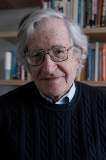
Professor Noam Chomsoky - Only Melbourne appearance booked out - Register on the wait list


Deakin University logo


Professor Noam Chomsky - Public Lecture

Noam ChomskyDeakin University proudly presents Professor Noam Chomsky in a free public lecture and his only public appearance in Melbourne. Professor Chomsky will present a lecture entitled “Changing Contours of Global Order”. 

VENUE:
The Plenary
Melbourne Convention & Exhibition Centre
1 Convention Centre Place
South Wharf, VICTORIA 3006

Please note, tickets to this highly anticipated and free public event, proudly hosted by Deakin University, are ‘sold out’. We regret any disappointment caused.
We do however invite you to register your interest for any spare, returned or cancelled tickets on our wait list, by clicking the ‘continue booking’ button below.
One ticket per person registered on the wait list, will be issued directly, if and when tickets become available. We thank you for your understanding.

CONTACT DETAILS: For information about about Deakin University courses or general enquiries, please phone 1300 334 733,
email enquire@deakin.edu.au or visit our website: www.deakin.edu.au.

To return any un-required/excess tickets only, or for event specific enquiries, please contact:
Mr Trevor Dean
Manager, Corporate Events
Deakin University
Phone: 03 92468077
Email: trevor.dean@deakin.edu.au

TryBooking is providing the booking service free to Deakin University as part of its community goodwill. 

Dale Hess - Calendar - 20111024 to 201123


Tuesday 25 October – Saturday 5 October: The Tunnel Rat by Neil Cole. 
The tunnel rat, based on true stories from the Vietnam War, explores the nature of post traumatic stress on an individual and societal level. It has a season at the Malthouse Theatre from October 25.
Thursday 27 October, 6 pm – 7.30 pm: Ethics in Philanthropy Debate. Does philanthropy reinforce the distinction between the haves and have nots? Come and hear what some of our leading philanthropic and public policy thinkers and commentators have to say. 
Speakers: Prof. Dennis Altman, Rod Quantock, Emeritus Prof. Dorothy Scott, Stephanie Alexander and Cath Smith. Co-hosted by Melbourne Writers Festival, Australian Communities Foundation, ABC Radio National and Federation Square. BMW Edge, Federation Square. Free, bookings essential. Book now
Friday 28 October, 2 pm – 5 pm: Free public forum on religion and ecology to launch the Forum on Religion and Ecology @ Monash.
Panelists: Rabbi Jonathan Keren-Black (founding President of Greenfaith Australia), Assoc. Prof. John Bradley(Monash Indigenous Centre), Dr. Padmasiri Da Silva (Monash Centre for Studies in Religion and Theology), Prof. Norm Habel (Theology, Flinders University), Elyse Rider (Monash Centre for Comparative Literature and Cultural Studies), Dr. Salih Yucel (Monash Centre for Studies in Religion and Theology). Monash University Caulfield H Building Room 1.16. RSVP (for catering purposes):Sharon.Elliot@monash.edu.au with subject line: Forum on Religion and Ecology RSVP.

Saturday 29 October, 8.50 am to 5.00 pm One-day Symposium on Climate Change – Cultural Change: Religious Responses and Responsibilities: Keynote address: Professor Norman Habel “Eco-wisdom and Climate Change”. 
Dr. Norman Habel hails from Yulecart, near Hamilton in Victoria, Australia and is a pastor of The Lutheran Church. He was professor of Biblical Studies in the USA from 1955-1973. In 1974 he returned to Australia and established the first Religion Studies Department in Australia. From 1984-1987 he was Principal of Kodaikanal International School in South India. During his time in India, he and his wife Janice Orrell established the Grihini programme, a school for empowering oppressed uneducated Tribal and Dalit women in the remote hills around Kodaikanal. Centre for Theology and Ministry, 29 College Crescent, Parkville. For further details and to register visit:http://www.trinity.unimelb.edu.au/about/news--media/events/cultural-change-symposium.html; please register by Friday 21 October 2011. Registration (includes tea/coffee, morning and afternoon tea and lunch): $55 full; $45 concession. Contact: Dr Anne Elveyaelvey@trinity.unimelb.edu.au; Dr David Gormley O’Brien dobrien@trinity.unimelb.edu.au.
Thursday 3 November, 6.30 pm (time TBC): Public Lecture by M. V. Ramana. 
M.V.Ramana is an Associate Research Scholar on Science and Global Security at Princeton University. He works on the future of nuclear energy in the context of climate change and nuclear disarmament and is completing a book on nuclear power in India. He is a member of the Science and Security Board of the Bulletin of the Atomic Scientists and the International Panel on Fissile Materials. He will address the topic of Australian uranium sales to India. This is an event held jointly by MAPW and ICAN. Venue: Trades Hall. Further info: Nancy: 9023 1958.

Saturday 5 November, 9 am – 11 am: Oases breakfast: Climate Change and Natural Law.  Speaker: Barrie Pittock. 
While the message is clear that climate change is here (and in some areas, might already be having disastrous effects), there is still hope for the future, and the ideas presented here will inspire people to take action. Barrie Pittock did a Ph. D. in physics in 1963. He joined CSIRO in 1965 and worked on stratospheric ozone, solar-weather relationships, surface climate change, the climatic effects of nuclear war, and the greenhouse effect. Cost waged $25, unwaged $15. Augustine Centre, 2 Minona Street, Hawthorn. RSVP to OASES 03 9819 3502 or email info@oases.edu.au

Tuesday 8 November, 6.30 pm:  Film screening: 'I Was Worth 50 Sheep'. 
Join us for an evening of learning and discussion with the opportunity to be part of creating change for Afghan women and girls. This is a compelling, award winning documentary film by Swedish filmmaker Nima Sarvestani that follows 16-year old Sabere's courageous actions to escape from and divorce her 55 year old, violent, Taliban husband of 6 years when she calls on the help and sanctuary of her family and a local Safe House in her desperate mission. Together, progress is made, however it becomes clear that this common pattern of abuse is about to be repeated as her young sister has been sold for 50 sheep. Venue: 1000 Pound Bend Cinema, 351 Little Lonsdale Street, Melbourne. Tickets: $20/$15 concession $25 solidarity ticket. Fingerfood and wine will be available for purchase. Bookings essential: Onnie: mok@connexus.net.au to pre-book your ticket. All funds raised will go to support women's projects of RAWA (http://www.rawa.org) and the Cooperation Center of Afghanistan (http://www.ccamazar.org).

Wednesday 9 November, 6.30 pm: Film Premiere: Dirt cheap 30 years on. 
An updated version of the 1980 film, Dirt Cheap, 30 years on...the story of uranium mining in Kakadu tells the story of how Ranger uranium mine was imposed on the Mirarr people in the late 1970s. The film also provides contemporary insight into the Mirarr's experience with Ranger and Jabiluka. The premiere will be in Melbourne on Wednesday November 9th at 6.30 at the State Library Theatrette with speakers including representatives from Gundjeihmi and the Environment Centre NT.

Wednesday 9 November, 6.30 pm: Prospects for Peace in Israel/Palestine. 

Kathy Kelly, nominated three times for the Nobel Peace Prize, has been described as probably the most respected leader in the American peace movement.  Kathy has invested her life in search of non-military solutions to end wars, often at great personal cost. Kathy has lived in war zones, sharing the dangers with civilians in Nicaragua, Gaza, Bosnia, Iraq, and Afghanistan. Venue: Church of All Nations, 180 Palmerston Street, Carlton. $15 waged $10 unwaged (no need to book). Further info for this event and following two events please contact either Simon: smoyle@gmail.com or Dale: d.hess@ozemail.com.au...

Thursday 10 November, 7.30 pm: Conversations with Kathy Kelly. 

Friday 11 November, 6 pm  – Sunday 13 November, 4 pm: Transforming the world, Transforming ourselves: a weekend retreat with Kathy Kelly. 

Wednesday 16 November, 5.30 pm – 8 pm: Food Security Issues in Timor-Leste. 
The forum will address food security issues, including agricultural practices, climate, imports, skills, quality of seeds and many other issues The Keynote Speaker will be Dr Brian Palmer, former Agriculture Adviser to the President, Minister for Agriculture and ‘Seeds for Life’ Manager. He will be joined by two panel members: Dr Bev Wood Food Security Adviser and expert on food security issues David Adams Victorian Department of Sustainability and Environment who will address land cover and land use issues. Venue: Edinburgh Gardens Community Room Off Brunswick Street, North Fitzroy (Old Fitzroy Football Ground—Melway Reference 2C 1C). The forum will be webcast live on the evening from 6:15 pm at http://timorlive.vlga.org.au. For catering purposes please RSVP to Gary Jungwirth, Timor-Leste Project Officer by Friday 11 November 2011 via email, vlga@vlga.org.au or phone 9349 7999.

Tuesday 22 November – Wednesday 23 November: Ethics in a Multifaith Society: Muslims and Christians in Dialogue. The conference “Ethics in a multifaith society: Muslims and Christians in Dialogue” is held in honour of M. Fethullah Gülen, from whom the Australian Catholic University Chair in the Study of Islam and Muslim-Catholic Relations, established in 2007, takes its name. For Fethullah Gülen, dialogue between Jews, Christians and Muslims is imperative, not only because of what followers of these three monotheistic religions have in common, but also because of their shared responsibility to make our world a more peaceful and safer place. Australian Catholic University, 115 Victoria Parade, Fitzroy.  Conference Program (PDF, 1.25MB); Conference Registration (PDF, 472KB);  Conference Poster (PDF,3.75MB)

Total Pageviews