Showing posts with label Finance and Economics. Show all posts

Thursday, 11 February 2016

Dale Hess Calendar - Dates for your diary


Thursday 18 February – Thursday 3 March: Transition Film Festival. The Transitions Film Festival is visionary program dedicated to spotlighting the complex challenges, cutting-edge ideas, creative innovations and mega-trends that are redefining what it means to be human. We present positive, solutions-focused films and showcase cutting-edge ideas from around the world, along with the creative, academic, governmental, community and business leaders who are creating change locally. http://www.transitionsfilmfestival.com/melbourne-program-2016/

Thursday 18 February, 6.30 pm – 8 pm: Market Forces Campaign Launch. Market Forces believes that the banks, superannuation funds and governments that have custody of our money should use it to protect not damage our environment. We're planning to make this year massive. Massive campaigns, resulting in massive change. We have climate change commitments from banks that need to be turned into concrete action that moves finance out of fossil fuels. We want to turn divestment from coal, oil and gas from a steady stream to an unstoppable torrent. And of course, we have new dirty coal proposals here in Australia and overseas that need to be stopped in their tracks.  Venue: Treasury Room, Imperial Hotel, 2 Bourke St, Melbourne (corner Spring Street). Food provided, drinks at bar prices. Free entry but bookings are essential as places are limited. RSVP here. Market Forces is proud to be an affiliate project of Friends of the Earth Australia and a member of the BankTrack international network, connecting us with passionate campaigners, environmental issue experts and advocates of environmentally sustainable behaviour from the finance sector.  


Saturday 20 February, 5.02 pm – 7 pm: Peace, Faith and Solving Conflict. Invited speakers: Prof. Gary Bouma, UNESCO and Rev.Victor Kazanjian, Global Director United Religions Initiative. Venue: Cultural Infusion Centre, 49 Vere Street, Collingwood College Theatre (entrance from Campbell Street). Sponsored by Cultural Infusion and United Religions Initiative. Free event. Refreshments provided. Bookings:https://www.eventbrite.com.au/e/culture-talk-tickets-21240877035


Wednesday, 24 February, 7.30 pm – 9.30 pm: Syrian Conflict Information Evening. The Amnesty International Bayside Team are hosting an information evening on the current Syrian crisis. Presenting an impartial account of the current internal armed conflict in Syria, as well as information about the settlement process for refugees and asylum seekers. From 7.30 pm we will have three speakers, discussing the current Syrian crisis, intake of refugees and settlement services for refugees and asylum seekers here in Australia. Tim Redfern from Amnesty International Bayside, Alanna Attard from AMES and Panos Massouris from AMES will be speaking. Venue: The Sandy Beach Centre - 2 Sims Street Sandringham. Register here.


Saturday 5 March, 9 am – 11.30 am: Oases Breakfast Conversation: Listening to Indigenous Voices. Dr Robert Hoskin will share insights from his listening to his Kimberley friends relevant to relating with land and community. Together we will explore how listening means a change of heart, if not our change in approach to life and relationships, and discuss how  knowledge of the past might save us from endless repetition in the future. $30/$20 Concession. Main Hall, Habitat Centre for Spirituality, 2 Minona Street, Hawthorn. To book:http://www.oases.edu.au/breakfast/


Monday 11 April; Sunday and Monday, 24 April and 25 April; Sunday 1 May: Ecological Literacy. Ecological literacy was initially used byDavid W. Orr and physicist Fritjof Capra in the 1990s, to understand the Earth as a living system whose well-being was dependent on our thinking in terms of the interdependence of all living systems. In his Web of Life Capra writes of the emergence of a new paradigm challenging the old mechanistic and linear view of the universe and challenging notions of continuous growth and development and with it consumerism and commodification as the “normal”. Ecological literacy is about using this interdependent view of the world to help address the complex dilemmas around the destructive impact that humans have had on the world bringing us to what is often called the Anthropocene… And together we'll draw on the experiences and wisdom of all participants, and the 'natural world' around us. Cost $800. Further details: info@oases.edu.au.


Monday 25 April – Friday 29 April: Living the Peace Testimony with Greg Rolles. Explore the connections between war, militarism, climate change, colonisation of Indigenous peoples, racism – and your own urges to help bring peace. Silver Wattle Quaker Centre, 1063 Lake Road, Bungendore, NSW. Telephone:02 6238 0588

Friday 10 June – Monday 13 June: Indigenous Spirituality and Culture with Karen Kime. Journey into Aboriginal ways of teaching country, kinship and cross-cultural issues in work and community. The workshop will also include examples of other indigenous people. Silver Wattle Quaker Centre, 1063 Lake Road, Bungendore, NSW. Telephone:02 6238 0588


Monday 11 July; Sunday and Monday, 31 July and 1 August; Saturday 10 September: Recreating our Organisations. We live in a world of organisations, educational, familial, work…each with its own culture and processes and each creating its own set of experiences for those who interact with it. Whilst we cannot escape from the reality of organizations in our lives, we can learn to better understand, work with and change (for the better) the organizations in which we play a part…In this unit then our central question addresses the possibilities of recreating or re-imagining the way we organise that would create more soulful, meaningful, value based,  collaborative and generative organisations that are relevant for 21st century sustainable and socially just organisations. Cost $800. Further details: info@oases.edu.au.

Monday, 11 January 2016

THE WISE PERSON BUILDS THE HOUSE UPON A ROCK - AUSTRALIA MAY HAVE BUILT ITS HOUSE ON CRUMBLING SAND

Trans-Pacific Partnership will barely benefit Australia, says World Bank report

January 11, 2016 - 6:15PM
Peter Martin

Peter Martin

Economics Editor, The Age


Robb: TPP critics looking for 'gotcha moment'

Concerns over the power of multinationals in the TPP is 'fear-mongering that has been perpetuated for five years in ignorance' says Trade Minister Andrew Robb. Courtesy of ABC News 24.


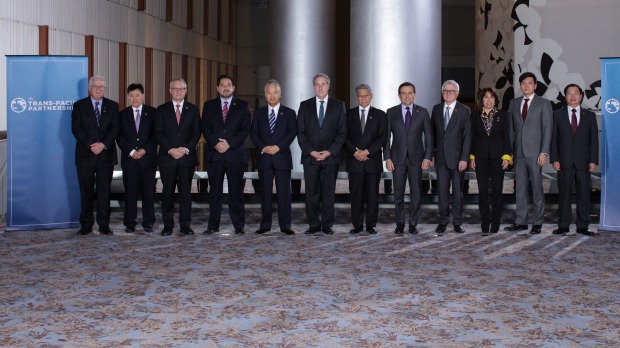
Australia stands to gain almost nothing from the mega trade deal sealed with 11 other nations including United States, Japan, and Singapore, the first comprehensive economic analysis finds.
Prepared by staff from the World Bank, the study says the so-called Trans-Pacific Partnership would boost Australia's economy by just 0.7 per cent by the year 2030.
The annual boost to growth would be less than one half of one 10th of 1 per cent.
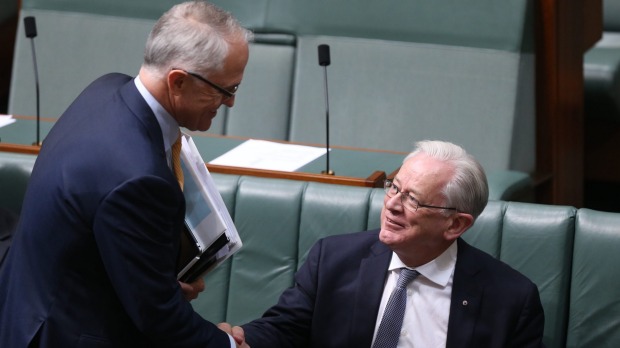
Prime Minister Malcolm Turnbull and Trade Minister Andrew Robb.
Prime Minister Malcolm Turnbull and Trade Minister Andrew Robb. 
Photo: Andrew Meares
Other members of the TPP stand to benefit much more, according to the analysis. Vietnam's economy would be 10 per cent bigger by 2030, Malaysia's 8 per cent bigger, New Zealand's 3 per cent bigger, and Singapore's 3 per cent bigger.
The study explains that highly developed nations such as Australia are either relatively reliant on things other than trade for economic growth or are already fairly free of trade restrictions.
Australia and the United States benefit the least from the Trans-Pacific Partnership. The study says it would boost the US economy by only 0.4 per cent by 2030.
Signatories to the TPP include Australia, Brunei, Canada, Chile, Japan, Malaysia, Mexico, New Zealand, Peru, Singapore, the US and Vietnam.
Non-members would suffer as members directed trade to other members. The biggest loser would be Thailand, whose exports are set to fall 2 per cent while Vietnam's grow 30 per cent.

The TPP barely benefits Australia

How much each of the 12 members of the Trans-Pacific Partnership will benefit from the agreement.
% impact on GDP by 2030
% impact on exports by 2030
VietnamMalaysiaBruneiNew ZealandSingaporeJapanPeruMexicoCanadaChileAustraliaUS012345678910
SOURCE: WORLD BANK
Since sealing the deal in October the Australian government has been reluctant to commission an economic analysis of its effects, turning down an offer from the Productivity Commission.
Prime Minister Malcolm Turnbull described the deal as a "gigantic foundation stone", saying it would deliver "more jobs, absolutely".
It opens up trade between members but makes trade more difficult with non-members through a process known as "cumulative rules of origin" where members lose privileges if they source inputs from countries outside the TPP.
The Productivity Commission has been strongly critical of the provisions saying that they turn so-called free trade agreements into "preferential" agreements.
The Partnership also requires members to sign up to tough intellectual property provisions and to submit to investor-state dispute settlement procedures administered by outside tribunals.
World Trade Online says the negotiating parties are planning to sign the agreement in New Zealand on February 4. It says Chile has confirmed the date and some trade ministers have already made arrangements to travel to Auckland, but it says New Zealand has yet to issue formal invitations.
The deal will not come into place until it has been ratified by at least 6 of the 12 signatories representing 85 per cent of their combined gross domestic product. Before ratifying the deal Australia has to table it in Parliament for 20 joint sitting days and consider a report from the joint standing committee on treaties.
Labor has yet to announce its position on the partnership. It has said previously that it opposes investor-state dispute settlement procedures but agreed to them in the Korea and China free trade agreements.
A spokeswoman for Trade Minister Andrew Robb said the agreement would deliver enormous benefits by driving integration in the fast-growing Asia-Pacific, and establishing one set of trading rules across 12 countries.
"The World Bank report demonstrates that all 12 member countries – representing around 40 per cent of global GDP – will experience economic growth and increased exports," she said.
Peter Martin is economics editor of The Age.
Follow Peter Martin on Facebook

Friday, 6 November 2015

Cardinal George Pell: Pope Francis's money man. Please remember that Judas had control of the money for Jesus.

Crux: Covering all things CatholicCovering All Things Catholic

View email in your browser

Vatican’s finance czar: 

I’m not wasting money


By John L. Allen Jr.
Cardinal George Pell's pushback came in response to two new books by Italian journalists documenting financial embarrassments in the Vatican and internal tensions related to the reform Pope Francis has promised.
Read more →

Those books are Avarizia (“Avarice”) by Emiliano Fittipaldi and Via Crucis (released in English as “Merchants in the Temple”) by Gianluigi Nuzzi. Fittipaldi’s book in particular is critical of Pell.

Thursday, 5 November 2015

ACOSS: Proposals for a higher GST and any unequal outcome.

ACOSS MEDIA RELEASE
Using a higher GST to pay for income tax cuts is a ‘recipe for more inequality': new report

Thursday 5, November 2015

The Australian Council of Social Service today released new modelling from the National Centre for Social and Economic Modelling (NATSEM) to show what an increase in the GST to 15% would mean for households across the community. The NATSEM modelling also shows what  it would mean if the Federal Government used the revenue from an increase in the GST to fund a reduction in personal income taxes across different income groups.

The NATSEM modelling, commissioned by ACOSS with support from the Carnegie Foundation, confirms that using an increase in the GST to fund income tax cuts will mean households on low and modest incomes are significantly worse off and higher income households are the winners, paying less tax overall as a proportion of their income.

DOWNLOAD Report

A higher GST?

“The NATSEM modelling of an increase to 15% on the existing base of the GST or a broadening of the GST base to fresh food, health and education confirms that either change would be regressive. Low and modest income households would clearly pay a higher proportion of their income, in comparison to higher income households through an increase in the GST, whether by increasing the rate or broadening the base by removing the exemptions,” said ACOSS CEO, Dr Cassandra Goldie.

Ben Phillips of NATSEM said, “An increase in the GST has a much bigger impact on low and modest income households because they spend more of their overall income to meet their living costs, in comparison to people on higher incomes who are better able to save. An increase in the rate of the GST to 15% would require people in the lowest 20% of the income brackets to pay 7% more, people in the middle 20% 4.2% more, and people in the highest 20% income bracket just 3% more of their income.”

Mr Phillips said, “A broadening of the base of the GST to fresh food, health, water and education would also be regressive, with people on lower incomes paying proportionately more of their incomes on these essentials. The relative impacts are clear: 4.6% of income for people in the lowest income brackets, 2.7% for people in the middle, and just 1.7% for the highest income earners.

A higher GST to fund income tax cuts?

“NATSEM has also modelled the impact of raising the GST to 15% to pay for a cut of 5% in all personal income tax rates to demonstrate how this would change who pays what proportion of tax, in reference to their incomes. The results are stark: two thirds of households, on incomes up to about $100 000 would be worse off and the top 40% would gain at the expense of the bottom 60%. The lowest 20% of households by income would lose $33 a week (6.6% of income) on average while the top 20% would gain an average of $69 a week (2.1% of income),” Mr Phillips said.

Dr Goldie said, “Increasing the GST to fund income tax cuts is a also a big, complicated revenue ‘churn’ that would do nothing to ease the pressure on State health, education and welfare budgets, particularly as it would clearly require a major compensation package to ameliorate its impacts on people who are hit the hardest.  If it’s not about raising more revenue, the Government has to justify why this option is being considered at all.”

“Raising the GST to fund cuts to personal income tax across the board, as some advocate, is a recipe for more inequality, not a stronger economy,” said ACOSS CEO Dr Cassandra Goldie.

A better approach to tax reform? 

“ACOSS is a strong supporter of comprehensive tax reform to improve economic efficiency to support jobs growth, to increase simplicity and fairness, and to secure a more sustainable revenue base for essential services and infrastructure.  We agree with business and the unions that tax reform should remove tax concessions that are no longer fit for purpose, shift away from clearly inefficient tax bases such as stamp duties towards efficient bases such as land taxes, and remove distortions in the tax treatment of investment incomes. This was clear common ground from the National Reform Summit Group, and consensus between the Business Council of Australia and ACOSS.

“We welcome the Federal Government’s preparedness to put changes to superannuation tax concessions, negative gearing and capital gains and other tax concessions and loopholes, such a discretionary trusts and other tax shelters, back on the table.

“However, if the Federal Government’s main game for tax reform is to shift the responsibility for paying taxes away from personal incomes towards consumption, it would fail on all grounds.  Fairness and simplicity would be undermined and it would do little or nothing to improve economic efficiency. It would be a recipe for driving inequality. The Government’s own Tax Reform Discussion Paper highlighted that the most inefficient taxes are stamp duties and other business and transaction taxes, not personal income tax. This is where the serious effort to shift taxes should be focussed.

“ACOSS does not rule out any increase in the GST. However, an increase in the GST should not be our starting point, when low and modest incomes earners carry the greatest risk.

“There is no doubt that governments will need more revenue to continue to provide the health, education and welfare services the community expects. ACOSS supports efforts to reform the tax system to do this in the fairest and most efficient way. This research confirms our view that increasing the GST should be one of the last options considered to raise revenue for those services, when low and modest incomes earners will carry the greatest risk.

“ACOSS will continue to work with government, business, unions and the community to help make this happen. We cannot afford not to reform the tax system, but tax reform is not all about raising the GST,” Dr Goldie concluded.

Media Contact:
For interviews with Dr Goldie, CEO ACOSS or Ben Phillips, NATSEM, contact Fernando de Freitas (ACOSS) - 0419 626 155.

DOWNLOAD Report

Key Findings:
Increasing the GST:
  • Raising the GST to 15% without removing exemptions would raise $29 billion in 2016, increase the CPI by 2.8%, and reduce the spending power of the lowest 20% by 7%, the middle 20% by 4.2%, and the top 20% by 3%.
  • Removing the exemption for fresh food and leaving the GST rate at 10% would raise $7 billion, increase the CPI by 0.7%, and reduce the spending power of the lowest 20% by 2%, the middle 20% by 1%, and the top 20% by 0.6%.
  • Removing the exemption for health and community services and leaving the GST rate at 10% would raise $6 billion, increase the CPI by 0.6%, and reduce the spending power of the lowest 20% by 1.6%, the middle 20% by 0.8%, and the top 20% by 0.6%.
  • Removing the exemption for education and leaving the GST rate at 10% would raise $5 billion, increase the CPI by 0.4%, and reduce the spending power of all household income groups by a uniform 0.6%.
  • Removing the exemption for water and sewerage and leaving the GST rate at 10% would raise $1 billion, increase the CPI by 0.1%, and reduce the spending power of the lowest 20% by 0.4%, the middle 20% by 0.2%, and have a negligible impact on the top 20%.
Increasing the GST to pay for income tax cuts:
  • Increasing the GST to 15% without removing exemptions and using all of the revenue to pay for a 5% cut in all marginal personal income tax rates would result in losses for most of the lowest 60% of households up to around $100,000 in household income to pay for gains for most of the highest 40%:
    * 99% of the lowest 20% would lose an average of 6.7% of spending power, as any tax cuts would be offset by higher prices;
    * 91% of the second 20% would lose an average of 3.3%
    * 67% of the middle 20% would lose an average of 2.4%
    * 64% of the fourth 20% would gain an average of 1.8%
    * 75% of the top 20% would gain an average of 3.2%

Thursday, 29 October 2015

Damaging Australia's reputation: the dab hands of the financial & banking system, the politicians and the military.

Picture from The Age

... and, Networkers, just in case you thought it was only the politicians who are damaging Australia's reputation with corrupt activity (see link in last sentence about paying people smugglers), here is our wonderful banking system on display.  Of course, the Commonwealth Bank​ is not alone.  The organisation at the pinnacle of Austrailia's financial system, the Reserve Bank of Australia, has its problems as well. Recall the Securency scandal. And then you may also recall the NAB​ scandal. And the ANZ scandal.  And then there is Westpac and to top it all, the cream on the cake (so to speak), the millionaires club of Macquarie Bank

So - wotcha reckon, Networkers?  

Are all those previously referenced descendants of Ned Kelly​ or do they make Ned look respectable?  Just remember - these people hide behind a cloak of financial and business respectability ---- and they are trashing Australia's reputation.

To further explain how our politicians - and our military - are damaging Australia's reputation, Amnesty International has a lot to say


Tuesday, 1 September 2015

Dale Hess Calendar - 15-08-31


Dale Hess
Tuesday 1 September, 6 pm – 8 pm: Life on Planet Earth: Sustaining hope in the midst of fragility and uncertainty. St Michael’s is proud to host this fascinating lecture series presented  by one of Australia’s leading International Relations scholars and commentators, Professor Joseph A. Camilleri OAM. This series aims to shed light on the critical psycho-social, economic,  environmental and security challenges of our times – how they  affect us personally, our life prospects, our networks and communities,  Australia and the world. It will open up new ways of thinking about the past and present and new possibilities for reshaping the future. Venue: St Michael’s Hall, 120 Collins Street, Melbourne. Tickets: $15 per lecture or $50 series pass. Bookings:www.stmichaels.org.au.


Saturday 5 September, 9 am – 11.30 am: Breakfast: Exploring local initiatives for living a good, low carbon life. Join us for a lively breakfast where practitioners Donna Livermore, Sally MacAdams, Ben Habib, Nathan Alison and Catherine O'Shea will share their learnings and experiences transitioning towards a low carbon, localized lifestyle: transition towns, co-housing, permaculture and local energy trading systems (LETS).


Monday 7 September, 6.30 pm: Public forum: Can Christianity and Islam Co-exist?Speakers: Rev. Professor James Haire, AC, and Professor Azyumardi Azra CBE. Join us to hear two eminent Christian and Muslim public scholars discuss key issues for a multi-cultural and multi-faith Australia. This important and timely dialogue will address Christian-Muslim relations in the Australian-Indonesian context and seek to build fresh understanding of how people of different faiths and cultures can grow together in understanding and appreciation of one another.  Venue: Yasuko Hiraoka Myer Room, Level 1, Room 106, Sidney Myer Asia Centre, University of Melbourne, 761 Swanston Street, Parkville. Admission free, but RSVP to secure your seat: neic-office@unimelb.edu.au


Tuesday 8 September, 6 pm – 8 pm: The World Economy: An ‘ocean liner without lifeboats’: Financial crises and the myths of the free market: the case for regulation. St Michael’s is proud to host this fascinating lecture series presented  by one of Australia’s leading International Relations scholars and commentators, Professor Joseph A. Camilleri OAM. This series aims to shed light on the critical psycho-social, economic,  environmental and security challenges of our times – how they  affect us personally, our life prospects, our networks and communities,  Australia and the world. It will open up new ways of thinking about the past and present and new possibilities for reshaping the future. Venue: St Michael’s Hall, 120 Collins Street, Melbourne. Tickets: $15 per lecture or $50 series pass. Bookings: www.stmichaels.org.au.


Wednesday 9 September, 6.03 pm: Asylum Seekers: The Culture We Can’t Afford to Lose.Culture Talk with wine and cheese with Julian Burnside. Cultural Infusion, Collingwood School Theatre, 49 Vere Street, Collingwood. Free entry. Book: https://www.eventbrite.com.au/e/culture-talk-tickets-18255951041


Friday 11 September, 6.30 pm – 9.30 pm: Film Screening: The Good Lie. The Bayside Refugee Advocacy & Support Association invites you to a special Invites you to a special screening of an inspiring and powerful story of triumph, friendship and compassion. Orphaned by the brutal Civil War in Sudan, Mamere, his sister Abital, and friends Jeremiah and Paul face a gruelling trip across Africa to a refugee camp. Much later, they are selected for re-settlement in the U.S.A. Carrie (Reese Witherspoon) is contracted to find them jobs, and she soon finds herself swept up in their struggle for a better life. Followed by guest speaker: Russell Broadbent M.H.R. [Lib. McMillan].  St John’s Uniting Church 567 Glenhuntly Road, Elsternwick. Melway Map 67J3 Light supper provided. This is a free event. Donations welcome. RSVP email gm_moore@bigpond.net.au.


Saturday 12 September, 9 am – 4.30 pm: Youth Humanitarian Festival. Venue: Swinburne University of Technology, Hawthorn Campus Room ATC101. Cost: $15.http://www.youthhumanitarianfestival.com/


Tuesday 15 September, 6 pm – 8 pm: Islam, Islamism and Islamophobia    Religion and politics; terrorism and the ‘war on terror’. St Michael’s is proud to host this fascinating lecture series presented  by one of Australia’s leading International Relations scholars and commentators, Professor Joseph A. Camilleri OAM. This series aims to shed light on the critical psycho-social, economic,  environmental and security challenges of our times – how they  affect us personally, our life prospects, our networks and communities,  Australia and the world. It will open up new ways of thinking about the past and present and new possibilities for reshaping the future. Venue: St Michael’s Hall, 120 Collins Street, Melbourne. Tickets: $15 per lecture or $50 series pass. Bookings:www.stmichaels.org.au.


Wednesday 16 September, 9 am – 4 pm:  Youth Engaging the World: Living Pope Francis’ Vision of Faith. Registration: $35. St Michael’s Uniting Church, 120 Collins Street, Melbourne. Registrations –  https://www.acu.edu.au/616950; Email: iace@acu.edu.au  Phone: +61 2 9701 4176


Wednesday, 16 September, 6:30 pm until 8.30 pm: Atmosphere of Hope: Searching For Solutions to the Climate Crisis. Professor Tim Flannery, author, internationally acclaimed scientist and conservationist talks about his new book. Ten years after publishing his international bestseller The Weather Makers, acclaimed scientist and author Tim Flannery argues that Earth’s climate system is approaching a crisis. Catastrophe is not inevitable, but time is fast running out. In the lead-up to the United Nations Climate Change Summit to be held in Paris in DecemberAtmosphere of Hope provides both a snapshot of the trouble we are in and an up-to-the-minute analysis of some of the new possibilities for mitigating climate change that are emerging now. Venue: Clarke Auditorium, Eltham College, 1660 Main Road, Research ,Victoria. Entry: $35.00  includes a copy of the book or a $25 gift voucher, Tim’s presentation and refreshments. For Eltham College families (1 student and 1 adult) $35.00 or a $25.00 gift voucher. Prepaid early bookings are essential: 9439 8700 elthambookshop@bigpond.com


Thursday 17 September – Friday 18 September: Conference: Pope Francis and other Prophetic Voices: Calling Us to Reshape the Public Sphere.  Speakers for the conference include: Rev. Fr. Jerry Rosario SJ (India) – the Barefoot Priest from India , Dr. Jenny Te Paa Daniel (New Zealand) - Convenor of the International Anglican Peace and Justice Network, Fr Frank Brennan SJ AO – Australian Jesuit priest, human rights lawyer and academic, Professor Patrick Dodson – a Yawuru man from Broome, Western Australia, he is a former Chairman of the "Council for Aboriginal Reconciliation, Dr Rachael Kohn - produces and presents The Spirit of Things on ABC Radio National, Emeritus Professor Joseph Camilleri OAM - Managing Director, Alexandria Agenda and founder of the Centre for Dialogue at La Trobe University. Venue St Michael’s Uniting Church, 120 Collins Street, Melbourne. Registration is $125 for the 2 day conference. Registrations –  https://www.acu.edu.au/616950; Email: iace@acu.edu.au  Phone: +61 2 9701 4176.  


Thursday 17 September, 7.30 pm – 9.30 pm: Public Forum: Reclaiming Justice, Truth and Compassion in the Public Sphere. Registration: $10+ donation. Australian Catholic University, Cathedral Hall, 20 Brunswick Street, Fitzroy, Melbourne (Please note: different venue to the Conference and Youth Forum). Registrations –  https://www.acu.edu.au/616950; Email:iace@acu.edu.au  Phone: +61 2 9701 4176


Sunday 20 September, 5:30 pm to 7:30 pm: GreenFaith/ARRCC Planning and Discussion.5:30-6:00 GreenFaith/ARRCC planning and update; 6:00-6:30 Vegetarian dinner to share (please bring a dish – oven available); 6:30-7:30  Talk and discussion. Presentation by Nivy Balachandran about the worldwide United Religious Initiative and their Environmental work
You are welcome to come from 5:30 pm or join us later in the meeting. For more information contact Simon Grosser on info@greenfaithaustralia.org.


Tuesday 22 September, 6 pm – 8 pm: The Democratic Deficit: What it is and what to do about it. St Michael’s is proud to host this fascinating lecture series presented  by one of Australia’s leading International Relations scholars and commentators, Professor Joseph A. Camilleri OAM.This series aims to shed light on the critical psycho-social, economic,  environmental and security challenges of our times – how they  affect us personally, our life prospects, our networks and communities,  Australia and the world. It will open up new ways of thinking about the past and present and new possibilities for reshaping the future. Venue: St Michael’s Hall, 120 Collins Street, Melbourne. Tickets: $15 per lecture or $50 series pass. Bookings: www.stmichaels.org.au.


Monday 28 September,  8.45 am to 5.30 pm: Ecological Aspects of War: Religious Perspectives from Australia. A one-day symposium to consider intersections between war and ecology, through the lenses of religious social teachings and sacred texts, representative of the multi-cultural and inter-faith constitution of contemporary Australian society.  Keynote presentation  “Planet Earth as a Victim of War”  by Dr Jenny Grounds. Venue: Trinity College Theological School Trinity College Royal Parade, Parkville. Cost: Full $40 Concession $30 Skype $15 (you will be supplied with a url and password via email nearer the date). Register here. Early registrations are appreciated. Registrations close: Friday 11 September 2015. For further information contact Anne Elvey: aelvey@tpg.com.au


Tuesday 29 September, 6 pm – 8 pm: State of the Nation   How is Australia faring? A fresh look at its society, economy and politics. St Michael’s is proud to host this fascinating lecture series presented  by one of Australia’s leading International Relations scholars and commentators, Professor Joseph A. Camilleri OAM. This series aims to shed light on the critical psycho-social, economic,  environmental and security challenges of our times – how they  affect us personally, our life prospects, our networks and communities,  Australia and the world. It will open up new ways of thinking about the past and present and new possibilities for reshaping the future.Venue: St Michael’s Hall, 120 Collins Street, Melbourne. Tickets: $15 per lecture or $50 series pass. Bookings: www.stmichaels.org.au.


Saturday 10 October and Sunday 11 October: Voices for Justice Conference. For 10 years, Micah Challenge has been a global movement of aid and development agencies, churches, schools, groups and individual Christians who support the Millennium Development Goals to halve global poverty by 2015. Workshops include Climate Conversations; Campaign for Australian Aid; Prayer and advocacy Australia's aid program; Community organising strategies & skills; Theology of political engagement; Partner stories. Venue: Hughes Baptist Church in Hughes, Canberra. Registrations open at 10:30 am on Saturday morning.


Friday 16 October – Sunday 18 October: Local Lives – Global Matter: A Conference for Future’s Sake. Now is the time to announce a new paradigm and tell the story that has a future. Inspired by and following in the footsteps of a worldwide series of Economics of Happiness Conferences, this three day conference will include presentations, workshops, panel discussions, plenaries, story-telling, arts, music and site visits showcasing local initiatives. OASES is pleased to support this gathering of international and local thinkers and activists who will speak about: local economies and livelihoods; equitable, re-democratised societies; inclusive ethical culture; and the spirituality that connects us to the land and each other. Castlemaine Town Hall. For more information, to offer a presentation or generally get involved click here.


Sunday 18 October: Run 4 Refugees for the Asylum Seekers Resource Centre. Run 4 Refugees is our major fundraising event for the year and we'd love for you to take part. Last year we had over 500 amazing people who ran and walked for refugees, and raised over $250,000. This year we're aiming to raise over $300,000. The main event will be taking place in Melbourne on Sunday October 18th as part of the Melbourne Marathon FestivalYou don't need to be a serious runner to take part, there are distances to suit everyone- from 3km to the full marathon. To sign up for the run click hereTo create your fundraising page click here.


Monday 9 November – Tuesday 10 November, 9 am – 5 pm: Community Development: Introductory Course. Become more confident in designing & facilitating community development programs & activitiesLearn practical ways of empowering communities; understand the basic concepts of Community Development; examine power and change processes; discuss community development practices; hold conversations with experienced Community Development workers; access to further learning resources; come to understand the field; use the modes of head (intellect), heart (feelings), hands (practical work with people) and feet (groundedness). Venue: 2 Minona Street, Hawthorn.


Wednesday 11 November – Thursday 12 November, 9 am – 5 pm: Community Development: Intermediate Course. Become more confident in designing & facilitating community development programs & activitiesLearn practical ways of empowering communities; understand the basic concepts of Community Development; examine power and change processes; discuss community development practices; hold conversations with experienced Community Development workers; access to further learning resources; come to understand the field; use the modes of head (intellect), heart (feelings), hands (practical work with people) and feet (groundedness). Venue: 2 Minona Street, Hawthorn.

Total Pageviews