Showing posts with label Soil. Show all posts

Saturday, 16 March 2013

UN World Water Day - 22 March 2013 - water waste and water conservation


March 22, 2013 is the 20th anniversary of World Water Day. In honor of this important anniversary, this week we are highlighting 7 Strategies for Reducing Water Waste. Please visit the Food Tank website each day over the next week for posts focused on innovations around water. 


Although the earth has 1.4 billion cubic kilometers of water, only 0.001 percent of that is accessible for human consumption and use. And 70 percent of water is used for agricultural purposes. In 2012, the United States experienced the most severe drought in at least 25 years which, according to the U.S. Department of Agriculture (USDA), affected 80 percent of agricultural land in the country. Couple that with recent droughts in other parts of the world, most notably in the African Sahel, and the urgency for action to safeguard water resources is clear.

As water supplies face mounting pressures from growing populations, climate change, and an already troubled food system, analyses of “water wealth” and “water security” are laying the groundwork for future cooperation and stability. In order to meet all municipal, agricultural, and ecological needs for water, it is crucial to develop innovative water saving systems for the future of food production.

Here are seven strategies for reducing water waste in the food system:

1. Eating Less Meat

According to Sandra Postel of the Global Water Policy Project, it takes roughly 3,000 liters of water to meet one person’s daily dietary needs, or approximately 1 liter per calorie. The amount of water needed to produce one kilogram of red meat can range from 13,000 to 43,000 liters of water; poultry requires about 3,500 liters of water; and pork needs about 6,000 liters. Eating more meatless meals, even one or two days a week, can help conserve water resources. 

2. Using intercropping, agroforestry, and cover crops
Soil health is critical to water conservation. Diversifying farms by including cover crops, planting trees on farms, and intercropping can help keep nutrients and water in the soil, protecting plants from drought and making sure that every drop of water delivered by rainfall or irrigation can be utilized.

3. Implementing micro-irrigation
Approximately 60 percent of water used for irrigation is wasted. Drip irrigation methods can be more expensive to install, but can also be 33 percent to 40 percent more efficient, carrying water or fertilizers directly to plants’ roots. 

4. Improving Rainwater Harvesting
Since the 1980s, according to the International Food Policy Research Institute, farmers in Burkina Faso have been modifying traditional planting pits known as zai, making them deeper and wider and adding organic materials. As a result, the pits retain rainwater longer, helping farmers to increase yields even in years of low rainfall.

5. Using mobile technology to save water
Santosh Ostwal is an innovator and entrepreneur in India who has developed a system that allows farmers to use mobile phones to turn their irrigation systems on and off remotely. This helps reduce the amount of water and electricity wasted on watering fields that are already saturated.


6. Planting perennial crops
Perennial crops protect the soil for a greater length of time than annual crops, which reduces water loss from runoff. According to a report from the Land Institute, "annual grain crops can lose five times as much water and 35 times as much nitrate as perennial crops."

7. Practicing Soil Conservation
Soil conservation techniques, including no-till farming, can help farmers to better utilize the water they have available. According to the U.N. Food and Agriculture Organization (FAO), studies have shown that no-till techniques improve water-retention capacity and improve water use efficiency in crops.

Be sure to visit the official World Water Day website for more details about the day’s events, including activities in your community and tips for reducing your water footprint. You can also learn more about water issues from the Barilla Center for Food & Nutrition, the Global Water Policy Project, Food and Water Watch, and the Natural Resources Defense Council (NRDC).

What do YOU think? What are the best ideas, studies, and on-the-ground innovations helping to conserve water? 

Check out some of our newsletter articles below, reply to this email or call me, and please join the conversation on our website, on Facebook, on Twitter, on Pinterest, on Google+, and on YouTube
 
 
All the Best,

Danielle Nierenberg
Co-Founder, Food Tank: The Food Think Tank
www.FoodTank.org
Please connect with us on Facebook,  Twitter, and Pinterest

Tuesday, 19 February 2013

Dale Hess's Calendar - 2013-02-18


Thursday 21 February, 7 pm - 9.30 pm: Film screening: The Economics of Happiness.  The Oases Graduate School presents this film from the International Society for Ecology and Culture to promote systemic solutions to today’s social and environmental crises. Venue: 2 Minona Street, Hawthorn.  Donations on the night will be appreciated to help cover supper costs.  RSVP toinfo@oases.edu.au.


Monday 25 February, 1 pm: Public Lecture: If Gandhi Were Alive Today. Ela Gandhi, granddaughter of Mahatma Gandhi will be visiting Melbourne to interact with people and organisations aligned with her beliefs of peace and nonviolence. Mahatma Gandhi’s essential values of nonviolent action, social justice, and respect for women and Mother Nature remains alive at all times, and has continued its relevance in the current time. This lecture will focus on the treatment of women by the society and the importance of developing a culture of nonviolence and strategic interventions in education on action in nonviolence at various levels of academia. Venue: Upstairs seminar room, 147-149 Barry St Carlton, Vic, 3053. Website:http://www.aii.unimelb.edu.au/events/ela-gandhi-if-gandhi-were-alive-today-public-lecture.
 Monday 4 March and Thursday 7 March: Community Development Course. Learn practical ways of empowering communities; Understand the basic concepts of Community Development; Examine power and change processes; Discuss community development practices; Hold conversations with experienced Community Development workers; Access to further learning resources; Come to understand the field; Use the modes of head (intellect), heart (feelings), hands (practical work with people) and feet (groundedness). Led by Jim Ife,Jacques Boulet and Rob Nabben. Contact: 9819 3239, 2 Minona St, Hawthorn, icd@borderlands.org.au. Cost: $300 full / $250 con. Bookings essential.
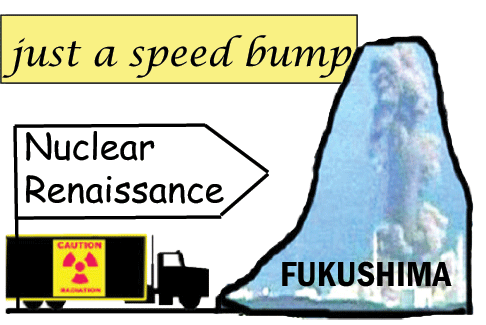
Saturday 9 March, 1 pm to 2.30 pm: Reflections of a Fukushima Farmer- the reality of nuclear meltdowns. Japanese for Peace invites you to bring a picnic lunch (or grab something at CERES), a rug/chair, and come and hear about the current situation for those affected by the catastrophic events two years ago. If you think you may come, please email  info@jfp.org.au to give us an idea of numbers. There will also be an optional tour of Ceres afterwards at 2.30 pm. CERES Community Environment Park,At the Village Green, Cnr Roberts and Stewart Streets, Brunswick East, Victoria (MELWAYS Map 30 B7)


Friday 15 March, 6.15 pm for 6.30 pm – 9.15 pm: Film Screening:  Rachel.  It was 10 years ago that Rachel was killed by an Israeli bulldozer as she tried to stop it crushing a Palestinian home. This is the story of her tragic death and the people she had come to love. State Library of Victoria, Conference Centre, Entry 2, La Trobe Street, Melbourne. Cost $15 plus booking fee $1.89. Book online: http://www.eventbrite.com.au/event/4361336876?ref=ebtnebtckt#

Saturday 16 March – Sunday 24 March: Cultural Diversity Week. 
For details, see: 


Tuesday 19 March: Following the US to War: Lessons from Iraq. Speakers will include Paul Barratt (Campaign for an Iraq War Inquiry); Dr Jenny Grounds(MAPW); Professor Richard Tanter; and Maki Yonaha (Japanese for Peace). Venue details soon!  For more read this. Facebook.


Wednesday 20 March & Thursday 21 March, 9 am – 5 pm, lunch and refreshments provided: Anti-racism Workshop.Refugees,Survivors and Ex-Detainees (RISE) is presenting a series of anti-racism workshops for organisations. The online registration form is up and running! Resisting Racism Victoria project, the first of its kind in Victoria, which will see the running of anti-racism workshops in 2013 for staff/volunteers of organisations that service communities of colour. Register online https://docs.google.com/a/riserefugee.org/forms/d/1lR0d5elFUl-zG_eNgMxin_J79thgPk-lY4pLh6xLFE8/viewform. Spaces filling fast! Find out more http://riserefugee.org/what-we-do/anti-racism. Watch the video: http://www.youtube.com/watch?v=J3HHEbT9djo.Please contact us at resistingracism@riserefugee.org if you have any questions. Later workshops 24 & 25 April, 22 & 23 May and 26 & 27 June. Melbourne CBD.


Friday 5 April and Monday 8 April: Advanced Community Development Course. Feel more confident in practicing community development in your workplace; Examine the issues, challenges and dilemmas of Community Development; Connect theory with practice; Hold conversations with decision makers and other Community Development workers; Access to further learning resources; Use the modes of head (intellect), heart (feelings), hands (practical work with people) and feet (groundedness); Think creatively about your organisational context; Interfacing with the wider context. Led by Jim Ife, Jacques Boulet and Rob Nabben. Contact: 9819 3239, 2 Minona St, Hawthorn, icd@borderlands.org.au. Cost: $350 full / $300 con. Both courses: $600. Bookings essential. 


Friday 19 April, 7 pm to 9 pm; Saturday 20 April – Sunday 21 April, 9 am to 5 pm: Biochar Workshop. As a soil additive, biochar offers numerous benefits. It increases the capacity for soil to hold water & nutrients, greatly reduce emissions of greenhouse gases, enhance crop yields and capture and store carbon for the long term. Learn to make and operate a simple biochar reactor; produce a range of different biochars at different temperatures; carry out basic tests on your biochars; make biochar/compost/mineral blends.  Faciltators: Prof Stephen Joseph, University of NSW, Paul Taylor PhD, Author of “The Biochar Revolution”, and Russell Burnet, Biochar Energy Systems. Workshop cost – includes lunch both days & Friday evening intro: $195 before 1st April; $250 regular price. Only $149 for extra family member or partner. Venue: Friday night: Bendigo Bank Theatre at The Capital, 50 View Street, Bendigo; Saturday & Sunday: A1203 Goornong-Mayreef Rd, Elmore. Website: http://kynetontransitionhub.com/home-4/biochar/biochar-workshop/ 
Sunday 21 April – Saturday 27 April: Nonviolent Action from the Strategic to the Prophetic. For young, emerging activists (18-30) who feel deeply that the present order with its emphasis on dominance and economic expansion is unsustainable, and are ready to develop commitment and skills in nonviolent ways to help promote change, this is an opportunity to learn from two very experienced activists, Margaret Pestorius and Simon Reeves.

This course is subsidized and a special application form must be used:
https://www.dropbox.com/s/jh2trfcr0dxyn5n/Nonviolent%20action%20%281%29.pdf.  The cost for full board & accommodation, plus materials, is $200. Participants will cover their own travel costs, to and from Silver Wattle Quaker Centre Ltd -1063 Lake Road, Bungendore NSW 2621 Ph: 02 6238 0588 

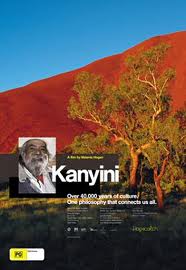
Sunday 12 May – Sunday 19 May: Kanyini Intensive (working with Uncle Bob Randall and his family). 7-day intensive (Sunday to Sunday, plus travel time) retreat located with in the Uluru National Park and surrounds in the Northern Territory. This is a unique opportunity to receive teachings from Bob Randall on the principles of Kanyini and Aboriginal culture. This will be a profound experience towards integrity in cultural counter-flows, a re-alignment of the importance of personal spirituality, and towards acknowledgment of 70,000 years of Aboriginal knowledge and traditions. Uncle Bob will share his wisdom and belief that spirituality is the ultimate answer to reconciliation in Australia. Uncle Bob will share his wisdom on aspects of Kanyini including, connections with the dreaming, place, family relationships and the spirit. Teaching Kanyini and sharing Aboriginal culture, knowledge and spirituality with all Australians and beyond, are an integral part of Bob's vision. Further information: email info@oases.edu.au or call 03 9819 3502.


Total Pageviews