Showing posts with label Philosophy. Show all posts

Monday, 27 August 2012

Media: ethics and public manipulation with Robert Manne, Kenneth Davidson and Louise Connor


MEDIA: ETHICS AND PUBLIC MANIPULATION
Speakers: Robert Manne, Kenneth Davidson and Louise Connor. The Australia Series: Four panel discussions co-hosted by the Search Foundation and The New International Bookshop on the topics most critical to Australia’s economic, political and environmental future. 7pm, Trades Hall Meeting Room 1, 54 Victoria St, South Carlton. Entry to the Australia Series talks is by $10 / $5. For more information about the or to confirm your place on the night please contact The New International Bookshop on (03) 9662 3744 or at nibscoordinator@gmail.com 

Saturday, 21 April 2012

Animals, Art, Philosophy and Raimond Gaita - all for free

Symposium | Animals in Art and Philosophy Part 2 – Raimond Gaita keynote

April 20, 2012
By 

In Flesh and Blood: Animals in Art and Philosophy

Still from Robert Bresson’s 'Au hasard Balthazar'
The second symposium in the series In Flesh and Blood: Animals in Art and Philosophy run by the Centre for Ideas at the Faculty of the Victorian College of the Arts (University of Melbourne) will take place on Tuesday, 24 April.
The draft program is as follows:
Morning
10.30 – 1.30: Animals, the law and politics
Justin Clemens ‘Man is a swarm animal’
What is it about ‘man’ that makes him a candidate for politics and the political? What makes human being-together a properly political question and not just a question of species-activity or genetic determinism? In this presentation, I examine a pun of Jacques Lacan. This is S1, l’essaim; S-one, the swarm. To date, this pun has, at best, been taken as a suggestive metaphor; at worst, as just another meaningless word-game, entirely typical of Lacan. My argument is that — if sometimes a pun is indeed just a pun — this pun is more than that. In fact, it provides a concept that bears centrally upon the relationship between technology, politics, language and psychoanalytic formalisation. At the end we find, indeed, that, for the later Lacan, man is indeed a swarm animal.
Cressida Limon ‘Animal Inventions: Haraway’s dog, Derrida’s cat and Spidergoats-in-law lives’
In this presentation I consider the links between the invention of animals in the creation stories of Genesis and the contemporary practices of patenting animal life forms as intellectual property. The question of law’s invention of animals will be addressed via a consideration of other animal inventions: Haraway’s dog and Derrida’s cat have something to teach us about intellectual property.
Connal Parsley ‘Border: law’s traditions, cinema’s possibilities, and the representation of the animal (and the human)’
This paper considers aspects of the role that the representation of the animal has had in the formation of the human person in the juridical tradition, aspects which I suggest are reflected in the representation of animals in contemporary film and literature. Through a discussion of the recent film Border (Armenia, 2009), and drawing on the work of Giorgio Agamben and Roberto Esposito, this paper asks about cinema’s possibilities for a different use of the representative apparatus and a different approach to the human’s knowledge of both itself and animals
Marc Trabsky ‘Law in the Slaughterhouse’
My aim in this paper is to explore how sacrifice becomes in the specificity of a spatial history an activity of place-making and a practice of lawfulness. I maintain that the relationship between law and the animal is inextricable from the human activity of place-making and moreover critical animal law needs to account for the different traditions of ordering space. I therefore gesture towards a jurisprudential reading of the situation of the animal by tracing the sacrificial rituals that guarantee the lawfulness of the place of the slaughterhouse.
Afternoon
 2.00 – 4.30 pm: Keynote Lecture by Professor Raymond Gaita (University of London and Australian Catholic University) discussing themes raised by his book The Philosopher’s Dog.
The first of the themes I would like to discuss develops a claim that Cora Diamond makes in her seminal paper ‘Eating Meat and Eating People’. She argues that discussion of the significance of the fact that human beings are animals, and more generally part of nature, often betrays a misunderstanding of the nature and importance of the ethically inflected ways we speak of human beings in, as Diamond puts it, ‘our life with language’. In most discussions of these matters, philosophers prefer to speak of persons or of rational agents.
Looking especially at the later sections of Wittgenstein’s Philosophical Investigations, I develop in The Philosopher’s Dog what I dubbed a ‘naturalism of surfaces’ — an account of the importance of the living human body, its many inflexions and demeanours in response to other human beings and animals, to the development of concepts as basic as sensation and thought. This kind of naturalism — one that accords great importance, for example, to the fact that we are creatures of flesh and blood, with faces and eyes — enables us to give the right account of why we cannot doubt that dogs have sensations and that they do not think about the problems of philosophy. It also yields a better account than is usually offered in philosophy and science of what should count as anthropomorphic projection onto animals of qualities that are distinctively human (at least on this planet).
But the importance of the concept ‘human being’ to understanding ourselves, what we have on common with other animals and what sets us apart from them, is complex and many layered. We understand this fully, I suggest, only in a cognitive realm that I have called ‘the realm of meaning’. It is a realm in which we strive to see things as they are rather than as they appear, for example, from a sentimental, anthropocentric or anthropomorphic perspective of ourselves on our relation to nature; it is a form of ‘seeing things as they are’ in which form and content, thought and feeling cannot be separated. That being so, I argue that philosophers and scientists should be more appreciative of the importance of art to our understanding of human beings, other animals and the many forms of their relations to one another.
Discussion will follow.
 4.40: David Shea ‘Biomimicry in Design and Architecture’
Date: Tuesday 24th April, 10:30am start
Venue: Federation Hall, VCA, 234 St Kilda Road, Southbank
All Welcome. Free to attend. No Registration Required.
Enhanced by Zemanta

Tuesday, 25 October 2011

Professor Noam Chomsoky - Only Melbourne appearance booked out - Register on the wait list


Deakin University logo


Professor Noam Chomsky - Public Lecture

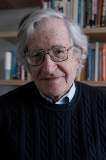
Noam ChomskyDeakin University proudly presents Professor Noam Chomsky in a free public lecture and his only public appearance in Melbourne. Professor Chomsky will present a lecture entitled “Changing Contours of Global Order”. 

VENUE:
The Plenary
Melbourne Convention & Exhibition Centre
1 Convention Centre Place
South Wharf, VICTORIA 3006

Please note, tickets to this highly anticipated and free public event, proudly hosted by Deakin University, are ‘sold out’. We regret any disappointment caused.
We do however invite you to register your interest for any spare, returned or cancelled tickets on our wait list, by clicking the ‘continue booking’ button below.
One ticket per person registered on the wait list, will be issued directly, if and when tickets become available. We thank you for your understanding.

CONTACT DETAILS: For information about about Deakin University courses or general enquiries, please phone 1300 334 733,
email enquire@deakin.edu.au or visit our website: www.deakin.edu.au.

To return any un-required/excess tickets only, or for event specific enquiries, please contact:
Mr Trevor Dean
Manager, Corporate Events
Deakin University
Phone: 03 92468077
Email: trevor.dean@deakin.edu.au

TryBooking is providing the booking service free to Deakin University as part of its community goodwill. 

Wednesday, 29 December 2010

Vale, Denis Dutton - who made sure we read & listened to the best stuff

Click to enlarge and read detail.

To-day the banner of Arts & Letters Daily is in black - instead of its usual red.  It announces the passing of Denis Dutton who is the same age as me. Ah, mortality!  

Whatever else Denis Dutton may have left behind, A& L Daily is quite a legacy.  

I discovered Arts & Letters Daily via Shane Maloney.  While Dutton originally designed A & L for his students so that they could keep up with essays, articles etc, it is the most wonderful resource for the miscellaneous mind. And A& L covers so much more including international newspaper and radio links. 

Thank you Denis for the hours of pleasure you have given me.

Enhanced by Zemanta

Wednesday, 7 October 2009

JOHN SEED, DEEP ECOLOGY, AND TRANSITION HEART AND SOUL COME TO MELBOURNE


John Seed has been in touch. He is coming to Melbourne.


Formatting this post has been problematic.
If you require John's flyers 
for his events and the Gaia Vic events
they are available on request by email to
misseaglesnetowrk(at)gmail(dot)com


*  a multi media Deep Ecology presentation at Ceres Fri Oct 9  details are in the attached flyer.
*  weekend experiential deep ecology workshop at Abbotsford Convent Oct 10-11 
* John will also be giving a talk on Monday evening Oct 12 for "Hoi Polloi" at Open Studio, 204 High Street, Northcote. Tram no. 86 goes right there. (Soup & bread provided)


GaiaVic's 'Heart & Soul'  event Oct 17.
GaiaVic's 'Heart & Soul'  event Oct 17. 'Heart & Soul' groups are generally inspired by deep ecology and Joanna Macy "work that reconnects" processes.  This workshop is particularly for people involved in, or interested in Transition Towns. 


Please help protect Tassie oldgrowth forests.

If you haven't already done so, please take a moment to sign a letter asking the Rudd Government to protect the old growth forests of Tasmania. (and please help to network this action alert, thanks)
MissEagle
racism-free
Photobucket

Thursday, 2 July 2009

A MONTH'S MIND:Vale Thomas Berry: may our deeds be your memorial


A Tribute to Thomas Berry (1914-2009),
Scholar, Visionary, Planet Lover
by
Mary Evelyn Tucker

Friends, students, and colleagues are mourning the passing of one of the great philosophers of our time. Thomas Berry, teacher, visionary, and author, left us with a story of the emergence of the universe and our extraordinary place in its unfolding.
“The basic mood of the future might well be one of confidence in the continuing revelation that takes place in and through the Earth. If the dynamics of the Universe from the beginning shaped the course of the heavens, lighted the sun, and formed the Earth, if this same dynamics brought forth the continents and the seas and atmosphere, if it awakened life in the primordial cell and then brought into being the unnumbered variety of living beings, and finally brought us into being and guided us safely through the turbulent centuries, there is reason to believe that this same guiding process is precisely what has awakened in us our present understanding of ourselves and our relation to this stupendous process. Sensitized to such guidance from the very structure and functioning of the Universe, we can have confidence in the future that awaits the human venture.”

—Thomas Berry, "The New Story" from The Dream of the Earth
A journey of nearly four decades with Thomas Berry has been one of the greatest gifts of my life, as it has been for countless others.

What is it that we all share—those of us who admire his unflagging spirit, his self-effacing manner, his compassionate visage, his penetrating insights, and his comprehensive vision?

It is a feeling of deep companionship that Thomas evokes—we are walking together somehow. Yes, the journey is long, and difficult. We may stumble or lose our way. But with Thomas another future is possible for the Earth community, and he empowers us to engage in the great work of imagining that future. In a time saturated with false promises and misplaced hopes amidst ecological destruction and economic unraveling, his steady evocation of an emerging Ecozoic era ignites human energy in vibrant and unexpected ways.

Thomas, in his brown corduroy coat, year after year while teaching at Fordham University and beyond, called us into the vast sweep of evolutionary dynamics. He lit up our imagination with a story of universe emergence from star birth and galaxy formation to life on Earth.

But there was more. Thomas wove us into the story—seeing us as beings who are biologically and historically grounded. He understood us as arising out of an immense journey of Earth and universe. He helped us to see our connections from the microcosm to the macrocosm, from the great flaring forth to the beauty of flowers and seeds, fish and birds. Thomas’ enduring appreciation for the communion of subjects in this process is something that has profoundly reshaped our minds and hearts.

Thomas’ inclusion of all of life in his own large embrace is what fills us with an ever greater capacity to enter into life’s rhythms and demands—shaping, against all odds, the clay of a life-giving future. There is no one who has held us to such high aspirations so steadily and with such humor and grace.

It is this remarkable gift that we celebrate in Thomas. Over and over again he stuns us with language that evokes companionship on a great journey—universe formation, Earth’s unfolding, life’s arising, human dreaming. He calls us to find our deep alignment with the powers that have sustained this remarkable epic.

Here now in the early 21st century, a new journey is beginning where the life story and the human story are becoming realigned. Thomas has planted the seeds to sustain this great transition and given us remarkable companions for the road ahead. For all of this gratitude, indeed, abounds.

A Brief Biography of Thomas Berry (1914-2009)
Thomas Berry was born in Greensboro, North Carolina in 1914. From his academic beginnings as a historian of world cultures and religions, Berry developed into a historian of the Earth and its evolutionary processes. He described himself as a “geologian.”

He received his PhD in European Intellectual History with a thesis on Giambattista Vico's philosophy of history. Widely read in Western history, he also spent many years studying the cultural history of Asia. He lived in China and traveled to other parts of Asia. He authored two books on Asian religions, Buddhism and Religions of India (distributed by Columbia University Press).

For two decades, he directed the Riverdale Center of Religious Research along the Hudson River just north of New York City. During this period he taught at Fordham University where he established and chaired the history of religions program. He attracted students from all over North America and directed some 25 doctoral theses. Along with Ted deBary he founded the Asian Thought and Religion Seminar at Columbia.

In 1995 he “retired” to his home city of Greensboro, North Carolina, where he continued to write, lecture, and receive visitors. His major contributions to the discussion on the environment are in his books The Dream of the Earth (Sierra Club Books, 1988 reprinted, 2006), The Great Work: Our Way into the Future (Random House, 1999) and, with Brian Swimme, The Universe Story (Harper San Francisco, 1992). Sierra Club Books and University of California Press jointly published his collection of essays, Evening Thoughts: Reflecting on Earth as Sacred Community in 2006.

Two new books of Berry's will be available this fall:
The Sacred Universe (Columbia University Press); and
The Christian Future and the Fate of Earth (Orbis Books).

Mary Evelyn Tucker and her husband, John Grim, are long-time editors of Thomas' work. They were graduate students of Thomas at Fordham University and he inspired them in founding the Forum on Religion and Ecology which they direct at Yale University.

Interested?
See a more complete biography and some of his essays at www.thomasberry.org
Source from Yes Magazine

Further reading:
~~~~~~~~~~~~~~
HAVE YOU BEEN INFLUENCED BY THOMAS BERRY?
Please continue to his Month's Mind.
If you would like to contribute your experience of Thomas Berry
in and on your life
- and especially, but not exclusively, in an Australian context -
please send a paragraph or so to
misseaglesnetwork(at)gmail(dot)com
racism-free

Total Pageviews