Showing posts with label Grassroots democracy. Show all posts

Wednesday, 11 November 2015

Remembering - the war to end all wars : the Charter of Rights at Bakery Hill, the first document of participatory democracy in Australia

Cross posted with permission  from Advocacy @ St Paul's

To-night at 6.30pm at St Paul's Anglican Church, 3-5 Humffray Street, Bakery Hill, Ballarat, Advocacy@ St Paul's is joining with the Ballarat Trades & Labour Council to celebrate the Charter of Rights, drafted by the English chartist John Basson Humffray who was a leading figure in the events leading up to and surrounding the Eureka Rebellion. Members of the modern-day Ballarat Reform League are interested too.  The site on which St Paul's is located is believed to be the site of the "Monster Meeting" of 10,000 miners who gathered to hear the Charter of Rights.  Hedley Thomson, Chair of Advocacy @ St Paul's, will read the Charter of Rights. Brett Edgington, Secretary of the Ballarat Trades & Labour Council, will speak.  The Charter of Rights is Australia's first document relating to the concept of participatory democracy.

To-day is not only the anniversary of the Charter of Rights. It is Remembrance Day, the day when we commemorate "the war to end all wars".  Below is a letter written earlier this year by Hedley Thomson with reference to the idea of 'nation building' in which he references the events of Eureka. If you want to let us know that you are coming, please go here.


14th May 2015

The Editor
‘Ballarat Courier’
PO Box 21
Ballarat, 3353


Dear sir,

In the lead up to the 100th Anniversary of the Gallipoli landing, the ‘nation building’ significance of the event was often mentioned. This assertion needs to be challenged. Aside from the disaster that was Gallipoli, for three quarters of a century prior, European settlers had a clear-eyed view that the Australian landmass would one day comprise one nation. For example:
1840s – colonial governments agreed that there should be one railway gauge to facilitate trade and transport throughout what would one day be a single nation. The fact that the one gauge objective was not achieved was to do with subsequent technical decisions, not a change of vision.
  • 1854 – the Eureka rising – no civil war was required to affirm the commitment to establishing a parliamentary democracy; the death of two-dozen people was enough. What’s more, Eureka was a multi-cultural event at a time when Australia was the most multi cultural ‘nation’ on Earth.
  • 1860s onwards - the Australian Constitution was developed over 40 years by the ‘founding fathers’, including Ballarat’s own Alfred Deakin. Here was true leadership, providing us with a parliamentary and electoral system with a sensible pragmatic structure to ensure representative democratic government.
  • 1880s – the works of Henry Lawson and other writers, with their strong references to a sense of being Australian, independent of spirit, the mother country left behind.
  • 1901 – Federation – the culmination of the past 60 years’ work.

On the basis of this history of Australia, it is arguable that our ‘nation’ was more independent, self-supporting and self-assured then than we are now! 

Hedley Thomson


Saturday, 26 October 2013

Museum of Australian Democracy at Eureka - M.A.D.E. - and films of Human Rights struggles and solutions


Miss Eagle went to see the first of the movies in this series last night.
Women in Liberia, after decades of civil war, 
took up the cudgels of protest against both sides.
Organising major protest against self-seeking politicians?
Take lessons from these Christian & Muslim women.

M.A.D.E for Movies

M.A.D.E WILL BE SCREENING FOUR AWARD WINNING AND THOUGHT PROVOKING DOCUMENTARIES, THESE SESSIONS ARE PRESENTED BY THE HUMAN RIGHTS ARTS AND FILM FESTIVAL.

See below for session times and links to view trailers.
Bookings Essential - Call: 1800 287 113
ONLINE BOOKING AVAILABLE click on the relevant links below

TICKETS $10 CONC $7 PER SESSION

PRAY THE DEVIL BACK TO HELL (72 MINUTES)

SUN 27th OCT 11.30am
SUN 3rd NOV 2pm
Director: Gini Reticker/ USA/ 2008 / Documentary      
Tribeca Film Festival ‐ Best Documentary Feature        
Pray the Devil Back to Hell chronicles the remarkable story of the courageous Liberian women who came together to end a bloody civil war and bring peace to their shattered country.
Thousands of women — ordinary mothers, grandmothers, aunts and daughters, both Christian and Muslim — came together to pray for peace and then staged a silent protest outside of the Presidential Palace. Armed only with white T-shirts and the courage of their convictions, they demanded a resolution to the country’s civil war. Their actions were a critical element in bringing about an agreement during the stalled peace talks.
A story of sacrifice, unity and transcendence, Pray the Devil Back to Hell honours the strength and perseverance of the women of Liberia. Inspiring, uplifting, and most of all motivating, it is a compelling testimony of how grassroots activism can alter the history of nations.


WORDS OF WITNESS (68 MINUTES)


SAT 26th OCT 7.30pm(one screening only)
Director: Mai Iskander / Egypt and USA / 2012 / English and Arabic with English subtitles / Documentary
Berlinale, 2012, One World Film Festival, 2012 – Best of the Festival Jury Award 
During the Egyptian uprising, social media was the weapon of choice for a new generation. In Words of Witness, filmmaker Mai Iskander follows Heba Afify, a budding online journalist reporting from the frontline of the revolution. Heba's attempts toreport are continually compromised by the restrictions she faces as a young woman in Egyptian society – in particular, by her mother's incessant reminders that, whilst a journalist, she is above all 'a girl'. As the country begins the transition towards democracy, Heba starts to understand that this hard-­fought revolution may in fact not yet be over. Exploring the personal and political in equal measure, Words of Witness is a timely glimpse into post-­revolution Egypt today.               

TAXI SISTER + RED WEDDING - 2 DOCUMENTARIES COMBINED AS ONE SESSION (1HR 45 INCLUDING 15MINUTE INTERMISSION)

SUN 27th OCT 1.30pm
SUN 27th OCT 5.00pm 
FRI 1st NOV 7.30pm
Two women, two astonishing documentaries: one a Senegalese taxi driver, the other a rice farmer from rural Cambodia. M.A.D.E is honoured to present these two remarkable films about strong women, the obstacles they take on, and the profound changes they make.

TAXI SISTER (30 MINUTES)

Director: Theresa Traore Dahlberg/ Senegal / 2011 / Wolof and French with English subtitles /Documentary     
There are 15,000 taxi drivers in Senegal; only 15 of them are women. Taxi Sister follows one of them. As Boury speeds around Dakar transporting tourists and locals to their destinations, she must defend herself against the social taboos that define driving as a male profession. An energetic peek into urban West Africa, Taxi Sister revels in the solidarity of a small group of women as they accelerate change.

RED WEDDING (58 MINUTES)

Directors: Lida Chan &Guillaume Suon / Cambodia and France / 2012 / Khmer with English subtitles /Documentary
IDFA, 2012 – Winner Best Mid-­Length Documentary   
Thirty years have passed, and on the eve of her son’s wedding, Sochan Pen is finally ready to break her silence. At the age of 16, she was forced to marry a soldier as part of Cambodia's genetic engineering. Juxtaposing haunting archival and present day footage as Sochan confronts the people responsible for her rape and torture, Red Wedding is a land mark exposition of forced marriages under the Khmer Rouge.


M.A.D.E to inspire

An exhibition celebrating the Polish Solidarity Movement known as Solidarność will be on display at M.A.D.E

Solidarność


Exhibition runs
Oct 26 - Nov 25  
This exhibition was originally curated by the Australian Polish Historical Society to celebrate the 25th anniversary of the Solidarność (Solidarity) movement. It recognises the strength and determination of those involved and the important place the Solidarity movement has in the history of democracy.

Come to the Museum and experience these powerful images
Entry to M.A.D.E is free for Ballarat residents.

M.A.D.E (The Museum ofAustralian Democracy at Eureka)
102 Stawell St South,Ballarat, Vic 335
                        Ph: 1800 287 113                             


Tuesday, 22 October 2013

SAVING BALLARAT'S CIVIC HALL

There are more pix there as well as + an article by Jon Stanger

21 October 2013
New Group will Save Civic Hall

Around 200 people spilled out of the Ballarat Library meeting room on Sunday, forming a group to save the Civic Hall from demolition as currently proposed by the City of Ballarat.

Participants agreed on the beginnings of an alternative vision for Ballarat Civic Hall, which was unanimously decided should remain primarily for the use and benefit of the community.

The meeting was chaired by Jon Stanger. Speakers included historians, planners, academics, professionals and writers. Anne Beggs-Sunter talked about the heritage value of the Civic Hall and the long history of Council’s various decisions, commissioned plans and reports on the Civic Hall.

Michael Wilson, President of the Ballarat Residents and Ratepayers Association Inc informed the meeting that BRRA is willing to auspice the new group. Mr Wilson outlined the major concerns of BRRA, including the failure of Council to listen to the community.

“The most contemporary, cutting edge and common sense approach is to make the most of the existing building stock we already have,” said Ms Brackley du Bois. “Environmentally and economically this is the smartest thing to do.”
Ms Brackley du Bois said adaptive re-use was the popular approach around the world and the key message was to find “new tricks with old bricks”.
Former senior officer at Ballarat City Council Ron Egeberg encouraged people to sign the petition at savecivichall.com and urged more people to become involved.
The group was reminded by Jonathan Halls that Council’s actions over the Civic Hall are not compatible with democratic or local government principles.
At the 2 ½ hour meeting many sub-groups were formed to discuss and plan further action in the areas of activation of the Civic Hall, adaptive reuse and alternatives, tourism, governance, communications /media, fundraising, indigenous and youth involvement.

A committee was formed to coordinate ongoing activities, including leaders of the various sub-groups. The committee will meet again this week and all residents are encouraged to get involved by signing the petition at savecivichall.com
______________________________________________________________________
For additional information or images please contact:
Merle Hathaway
0419 324042
merle.hathaway@bigpond.com 


Saturday, 6 July 2013

Letters about letters : Making a social event out of letter writing to pollies about refugees


This 1936 picture of a refugee writing home 
shows that refugees are always with us.
Read the story of how this photo was found here. 

Many of our asylum seekers are suffering 
in indefinite mandatory detention. 
They need our support.

Sending letters to politicians is one of the best ways 
of contacting our MPs, 
and hand written letters get the most attention.

 Please accept this invitation to join us 
next Tuesday morning and add your support.

There will be some suggestons to help you.  
Short, clear letters are best.

See you then
Kath

Dear All,

Next Tuesday, (2nd Tuesday of the month) is Writers' Group.
Venue: 
Eastwood Leisure Complex, Ballarat
Cafeteria room.
Time: 10 am - 12noon
Gold coin donation for room hire
Bring: 
pen, paper, envelopes, stamps

There is a lot of material from the Bendigo Forum
[held a week ago in Bendigo]
 to lobby our politicians about.  
Perhaps Bob Carr heads the list!

Hope to see you all there.

Cheers,
Helen

Thursday, 22 March 2012

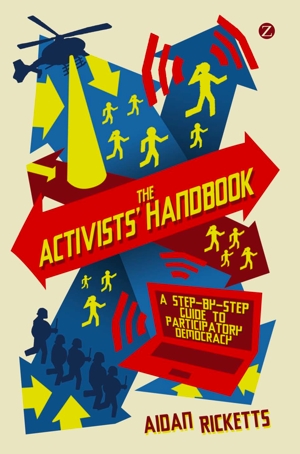
The Activist’s Handbook – a step by step guide to participatory democracy

The Activists’ Handbook is a powerful guide to social change activism and an essential resource for anyone ready to make a difference.
The Activist Handbook - a step by step guide to participatory democracy
Australian environmental activist Aidan Ricketts offers a step-by-step guide and more to starting up or
getting involved in grassroots movements.
Providing all the essential practical tools, methods and strategies needed for a successful campaign and
extensively discussing legal and ethical issues, The Activists Handbook empowers its readers to effectively promote their cause. With lots of example documents and comprehensive information on digital activism and group strategy, this is the ultimate handbook to participatorydemocracy.
256pp.  Published by Zed Books, London, 2012.
$29.95 plus $6 postage
You can buy the book online here.
If you have been referred to this site from another social change organisation, select them first then press ‘click to buy'.

10% of each sale will go to the nominated organisation. Please consider listing FoE as the recipient. This information is from the site of Friends of the Earth, Melbourne. Thanks.
Enhanced by Zemanta

Total Pageviews