Showing posts with label Poverty. Show all posts

Friday, 8 January 2016

American-style food stamps on the way for Australian pensioners? A bit rich from a very rich Prime Minister?

Cross-posted with Advocacy

One-third of Australian pensioners live in poverty: 
OECD report
January 8, 2016 - 9:10AM
Social Affairs Reporter


More than one-third of Australian pensioners are living below the poverty line, making the country among the worst performers in the world for the financial security of older people.
The findings of the OECD report, Pensions at a Glance 2015, compared Australia to 33 other countries.
Australia was ranked second lowest on social equity, with 36 per cent of pensioners living below the poverty line, which the report defined as half the relevant country's median household income.
One-third of Australian pensioners live in poverty, according to a report by the OECD. 
Photo: Greg Newington
Australian pensioners fared better than their counterparts in South Korea, where 50 per cent live below the poverty line but performed poorly against the OECD average of 12.6 per cent.
The report, released last month, found the Australian government contributes less to old-age benefits than other OECD countries. The Australian government spends 3.5 per cent of GDP on the pension, below the OECD average of 7.9 per cent.
The findings are backed up by the Global Age Watch Index 2015 report card which rates countries by how well their older populations are faring. It ranked Australia lowest in its region on income security, due to the high rate of old age poverty and pension coverage which is below the regional average.
 
Paul Versteege , senior research and advocacy adviser with the Combined Pensioner and Superannuants Association, said the base Australian pension rate was low compared to median household incomes.

"There are huge discrepancies among retirees in various countries," he said.
"In Australia there is quite a large group that has to subsist on the age pension as its only source of income. In spite of pension reform and recent increases to the pension, the base pension is still quite low for singles."
The annual payment for a single person is about $22,000 and $34,000 for a couple, with 2.25 million Australians claiming the pension.
Council on the Ageing chief executive Ian Yates said the report challenged perceptions that the entitlement was too high.
"Claims that the age pension is somehow too extravagant and unsustainable do not bear out," he said.
"We have always argued for progressive improvements to the pension but at the moment an increase to the pension is highly unlikely and more focus ought to go towards building superannuation contributions."
Chief executive of Vision Super Stephen Rowe said he was "staggered" by the findings of the OECD report, saying it painted a bleak picture for many older Australians.
"Are we generous enough with the pension? I don't think so."
He said that Australians retiring now have not received the full benefit of compulsory superannuation contributions, introduced in 1992, but were grappling with rising living costs.
"The basic cost of living in Australia is quite high, compared with  some other OECD countries," Mr Rowe said.
Chief executive of National Seniors Michael O'Neill said the pension had gone backwards in real terms and many older people had not accumulated enough superannuation to supplement the benefit.
"In terms of sustainability, the report confirms that Australia spends substantially less than the OECD average on pensions," he said.
"In fact, our pension spend has dropped and plateaued since 2000. Against other countries, our proportion of pensioners living below the poverty line is startling."

Read more:
 http://www.theage.com.au/national/onethird-of-australian-pensioners-live-in-poverty-oecd-report-20160106-gm0uno#ixzz3wbUL4jxn 
Follow us:
 @theage on Twitter | theageAustralia on Facebook


Monday, 30 November 2015

I've had an elegant sufficiency and any more would be a superfluous .... Sam Alexander of The SImplicity Institute speaks at Castlemaine on Degrowth

What is Degrowth? Envisioning a Prosperous Descent

What is Degrowth? Envisioning a Prosperous Descent
This is a transcript of my keynote address presented at the ‘Local Lives, Global Matters’ conference in Castlemaine, Victoria, 16-18 October 2015.Other keynote speakers included Rob Hopkins, David Holmgren, and Helena Norberg-Hodge.
Introduction
Thank you for that introduction, Jacinta, good morning everyone. I would like to begin by acknowledging the traditional owners of this land and to recognise that these have always been spaces of teaching, learning, sharing, and conversation. It is a real honour to be part of this conversation today.
When I was a boy, if ever I were amongst a group of people congregating at 9am on a Sunday morning it was because I was at Church. For better or for worse, I am now a lapsed, or rather, I should say, a collapsed Catholic, although I remain a seeker. But as I look around the world today, especially from my Western perspective, it seems clear enough that God, if he is not yet dead, as Friedrich Nietzsche declared, is, at least, increasingly absent. There seems to be a tension between our spiritual sensibilities and the cultures and systems within which we live. As the poet-musician, Tom Waits, would shout in the voice of a husky wolf: ‘God’s away on business.’
But the absence of God should not imply an absence of religious thinking in our culture or cultures. In fact, I would argue quite the opposite; that our Western religiosity has become ever more intense in recent decades, and what has happened is that we simply switched idols, no longer worshipping the God of Christianity, and instead worshipping at the alter of growth, singing praises to the God of GDP, our saviour, for only in growth will we find redemption. Our high priests now take the peculiar form of neoclassical economists, bankers, and national treasurers. Daniel Bell once wrote in his landmark text, The Cultural Contradictions of Capitalism: ‘Economic growth is the secular religion of advancing industrial nations.’
Since the industrial revolution this faith in growth has been unshakable. Today, however, we find ourselves at a moment in history where this faith is beginning to crumble, where the ideological ground beneath us is beginning to move – and opening up before our very eyes is a space, at last, for something new, a space where we are being called to think and live differently. What I would like to talk about this morning is something that has been emerging in recent years within the ever-widening cracks of capitalism, a new story, of sorts, or a new book of many different stories.
But I am not here to try to replace the god of growth with a new God. I will not pretend to be the next iteration of the high priest, nor am I about to pontificate about a new Doctrine or Dogma to which everyone must subscribe. As the anti-capitalist slogan goes, there may be one No, but there are many Yeses. So today I am going to talk about one of the yeses, which I hope can enrich the multitude of overlapping yeses we have all been exposed to this weekend, just as they have enriched me. To all those who have been part of the collective ‘yes’ this weekend, I thank you and I salute you.
The vocabulary I am going to focus on today revolves around the emerging ‘degrowth’ movement, which calls for planned economic contraction of developed or overdeveloped nations. I will get into details soon enough, but the basic case for degrowth is surprisingly simple:
1. The existing global economy is already in ecological overshoot, driven by the expansion of high-impact, Western-style consumer lifestyles and the structures of growth that often lock people into those lifestyles.
2. Great multitudes around the world do not have enough to live with dignity.
3. And, we have a population of 7.3 billion that is still growing.
Based on those three simple but extremely challenging premises – ecological overshoot, global poverty, and population – it follows that the richest nations must give up the pursuit of ‘more’ and find ways to flourish on less – much less. Less energy, less resources, less waste. And that means less consumerism, less globalisation, and ultimately, less capitalism.
But degrowth is not just a movement in opposition. Perhaps more than anything else degrowth is about embracing the abundance of sufficiency, it is about knowing how much is enough, and creating the necessary cultures, structures, and systems within which the entire community of life can flourish.

Friday, 23 August 2013

ACOSS on the campaign trail re child poverty in Oz. Are our politicians listening? Fix it!

ACOSS MEDIA ALERT

ACOSS calls for reform of family payments to tackle child poverty: New campaign is launched

The Australian Council of Social Service today unveiled new modelling detailing a path for making Australia's Family Tax Benefit system fairer - by better targeting payments to families that need support the most and simultaneously reducing poverty.We've heard very little in this election campaign about poverty and ideas for reforming Australia's complex tax and transfer systems. ACOSS has been arguing for reform of both using the Henry Tax Review as the blueprint," said ACOSS CEO Dr Cassandra Goldie."We know there are nearly 600,000 children currently living in poverty in Australia and the recent annual report of the longitudinal study of households (HILDA) showed that it increased by 15% in the last year. This is simply unacceptable in one of the wealthiest countries in the world.
"Our family payment system performs the vital dual roles of helping prevent child poverty and treating low and middle income families with children fairly by taking account of the costs of raising children in the tax-transfer system. We do not consider assisting low and middle income families with children as ‘middle class welfare'. However, it urgently has to be reformed if it's to prevent even greater levels of poverty.
"The family payment system is in urgent need of repair, having strayed from its primary goals over the past decade and increasingly been used for purposes that are not well targeted, such as the Baby Bonus, the Schoolkids Bonus, and the ‘Part B' payment for single-income couples.
"These two bonuses should be replaced with the savings not to be used to restore the budget bottom line, but instead used to restore the budget bottom line of low and middle income families.
"We want to see the savings from the Baby Bonus rolled into increased Family Tax Benefit A payments for preschool age children  (0 - 4), and the savings from the Schoolkids Bonus put into higher Family Tax Benefit A payments for school age children (5-18).
"Under our proposals, modelled by the National Centre for Social and Economic Modelling (NATSEM), around 50% of low income families (about 600,000 thousand families) in the bottom two quintiles would be on average around $1300 a year ( $25 a week) better off.
"Among the bottom 40% of families, three out of four families would receive higher payments. Sole parents, most of whom have low incomes, would particularly benefit with 71% better off.
"This reform, together with our proposed $50 a week increase in Newstart Allowance for single people, would help to offset recent payment cuts for sole parents fully reliant on income support.

"Our modelling using ‘cameos' of low income families with children of different ages shows that half currently fall below the poverty line. We found that three of these families currently below the poverty line (2 sole parent cameos and 1 couple families) would be lifted above the poverty line by the proposed changes.

"We call on the major parties to take the issue of poverty seriously and commit to restructuring the confusing Family Tax Benefits system as part of an anti-poverty plan for our nation.
"In these times of significant economic challenges, and falling revenues, we need to go ‘Back to Basics', with government assistance targeted to those who need it. Our proposals do not complete reform, but they take us in the right direction.
"ACOSS and our members across Australia's community welfare sector look forward to working with all parties and the next government in advancing such reforms," Dr Goldie said.
Media Contact: Fernando de Freitas 0419 626 155
Download report: 'Back to basics: Simplifying Australia's family payments system to reduce poverty and support families'
Have a Heart: Say No to Child Poverty: http://www.facebook.com/Australiahaveaheart.com.au/posts/424765044298653

Summary of NATSEM modelling:
• Half of all low income families in the bottom two quintiles (594,662 families or 50%) would receive increased payments
• Among the bottom 40% of families, three families would receive higher payments for every one that receives lower payments
• Among the top 40%, approximately roughly equal proportions of families would receive higher and lower payments
• The changes particularly benefit low income sole parents with older children and low income couples with younger children
• Among the bottom quintile (those at high risk of poverty) 106,000 sole parents would gain an average of $1,410 a year and 66,000 couples with children would gain an average of $1,179
• Sole parents would particularly benefit - 71% would gain and 14% would receive lower payments, compared to 27% and 21% respectively for couples with children.

• Modelling using ‘cameos' of low income families with children of different ages shows that of 16 cameos fully reliant on social security payments half (8) currently fall below the poverty line
• Of these families, 3 (2 of the sole parent cameos and 1 of the couples) would be lifted above the poverty line by the proposed changes
• Overall, incomes of 1,175,000 families (25% of all families) would rise by an average of $1,203 per year
• Incomes of 606,000 families (13%) would fall by an average of $2,316
• Incomes of 2,857,636 families (62%) would be unchanged

ACOSS Proposals:
• Replace the Baby Bonus and the School Kids Bonus with increases in the maximum rate of Family Tax Benefit A for preschool and school age children respectively. Current expenditure on the Baby Bonus would go to increase the maximum rate of FTB A for parents of children aged between 0 - 4; and spending on the Schoolkids Bonus would go to increase the maximum rate of FTB A for school age children.
• Replace FTB Part B for sole parents with a Sole Parent Supplement (at a higher rate for parents of older children than the current FTB B) to reflect the higher costs and demands of caring for children as a sole parent.
• Limit FTB Part B for couples with one parent at home caring for children until the youngest child turns 13, and tighten the income test on the primary earner (usually the father) to target this payment to families in greatest need.
• Index family payments to movements in average earnings as well as the CPI.

Monday, 12 August 2013

Compassion lacking says Milne while ACOSS outlines proposals for lifting people out of poverty


ACOSS MEDIA RELEASE

ACOSS outlines proposals for first 100 days of new government  


Monday August 12, 2013

In the run-up to next month’s federal election, the Australian Council of Social Service today unveiled a set of comprehensive proposals for the first 100 days of the new government.

“Whoever wins the September 7 poll will be faced with some big challenges requiring bold action to ensure our nation is fairer as well as prosperous,” said ACOSS CEO Dr Cassandra Goldie.

“The reality is that despite more than two decades of strong economic growth, fault lines are emerging in our economic and social foundations that we simply cannot continue to ignore.

“There are major holes in our social safety net that the next government will have to  address – in affordable housing, education, disability, mental and dental health, and community controlled services for Aboriginal and Torres Strait Islander peoples.

“Most alarming is the growing gap between those that are doing well and the people falling further behind. In spite of our wealth, a greater number of people are living in poverty, which will worsen as unemployment rises.

“Having 2.2 million people living below the poverty line, including nearly 600,000 children, is unacceptable. If we don’t take action to reverse this trend now, it will be more damaging and costly down the track.

“ACOSS wants to see the next Australian government set a specific target, a national development goal, to reduce poverty in our country. We want to see the development of an anti-poverty plan, and an annual report on progress to the Australian parliament.

“As part of this we need to increase the single rate of allowance payments, such as Newstart and Youth Allowance, by $50 per week and index them to wage movements, to alleviate and prevent worsening poverty.

“ACOSS understands the big task ahead for the next government to meet the needs and expectations of the community. It won’t be easy. However, we believe room can be made for investment in high-priority social programs by cutting waste in the Budget that has accumulated over the last decade (such as the Schoolkids Bonus and the Extended Medicare Safety Net).

“Ultimately, we need structural reform of Australia’s tax and transfer system. Therefore, ACOSS wants to see the new Federal Government commit to comprehensive tax reform, including a Green Paper and White Paper process to enable broad public consultation on tax. This should use the considered recommendations of the Henry Tax Review panel as the blueprint.

“We also call on the next government to come together with business, union and community groups to develop a compact about growing job opportunities, particularly for people who are long term unemployed. We are extremely concerned about rising unemployment, especially youth and long term unemployment, which is already at crisis level.

“ACOSS has developed concrete proposals in this area, including expanding the proven wage subsidy scheme and paid work experience, and greater investment in case management. We also need to tailor training and support to better prepare long term unemployed people for the available jobs of the future.

“In this election, we look to our political leaders for a clear plan to meet our challenges. We urge the ultimate winner to hit the road running with actions that demonstrate a commitment to deliver a fairer future for all - one which is inclusive and gives everyone the opportunity to participate and enjoy a healthy, decent and productive life,” Dr Goldie said.

Media Contact: Fernando de Freitas - 0419 626 155

Download ACOSS Election Statement: Bold Action for a Fairer Future


ACOSS proposals in brief:
In its first 100 days, the next Australian Government should commit to:
  • Commence a Green Paper and White Paper process for tax reform using the Henry Tax Review as blueprint
  • Commence the development of an anti-poverty plan. Set a specific target - a national development goal - and report annually on progress to the Australian parliament.
  • Promise to increase the single rate of Allowances, including Youth Allowance and Newstart, by $50 per week and index them to wage movements
  • Review family payments, including the Schools Kids Bonus, to target the payments to child poverty prevention, improving the income support for the poorest families.
  • Bring together business, union and community groups to make a compact about growing job opportunities particularly for people who are long term unemployed.
  • Commit to the National Rental Affordability Scheme as a long term government priority
  • Commence negotiations with the states and territories to fund a long term plan of action to expand affordable housing options and reduce homelessness.
  • Commit to investing in effective community based health care that creates healthy lives while reducing the pressure on hospitals and health budgets.
  • Make a long-term investment to improve Australia’s mental and oral health so that neither condition predicts poverty, disadvantage or isolation.
  • Outline the policies that will ensure people with disability can get the job and income they need to live with dignity
  • Reaffirm commitment to the findings and recommendations of the Gonski review.
  • Agree on a timetable to hold a referendum on recognising Australia’s First Peoples in the Constitution.
  • Commit to developing justice targets in relation to the Safe Communities Building Block under ‘Closing the Gap’ and to achieving such through the implementation of a National Partnership Agreement.
  • Abolish compulsory income management and redirect the savings to community development initiatives based on strong partnerships with local community leaders to improve economic and social outcomes at the local level.
  • Commit to strengthening engagement with civil society (for example through the COAG Reform Council) and ensure mechanisms for civil society to contribute to the broad agenda for structural reform. 
  • Include the community sector in national economic reform agendas to ensure everyone shares the benefits of lifting productivity, jobs growth, structural shifts in our industries and developing a strong economic future.
See full list of proposals in the ACOSS Election Statement

Thursday, 20 June 2013

The Challenge is on: Bankstown challenges Basic Cards and Income Management now that it has come to the Big Smoke,

The Income Management Map 


Sent: Thursday, June 20, 2013 1:29 PM
Subject: Bankstown Coalition set to challenge expansion of income management on anniversary of NT Intervention
 
Barb Shaw of Mount Nancy Town Camp, Alice Springs.

Say No to Government Income Management - 
Not in Bankstown, Not Anywhere Campaign Coalition
 
Media Release 20 June for immediate release
 
Bankstown Coalition set to challenge 
expansion of income management 
on anniversary of NT Intervention
 
Members of the Say No to Government Income Management - Not in Bankstown, Not Anywhere Campaign Coalition will join a rally this Saturday June 22, marking 6 years since the announcement of the NT Intervention.
 
The Coalition says it will challenge the further expansion of income management planned for July 1, 2013. Income management began in 2007 for Aboriginal people living under the NT Intervention and was expanded to Bankstown in 2012.
 
From July 1 2013, new categories of marginalised young people will be compulsorily placed on income management across the NT and all trial sites including Bankstown:
 
- People under 25 applying for a Crisis Payment for Released Prisoners
- Young people receiving an unable to live at home allowance
- Recipients of the Special Benefit
 
The Campaign Coalition in Bankstown is supported by 67 organisations representing a diverse range of ethnic and cultural communities along with trade unions and faith groups. Since a declaration calling for a community wide boycott on income management in 2012, Bankstown has the lowest numbers of people on both voluntary and compulsory income management of any trial site.
 
Semra Guler is a Regional Resource Worker with the Western Sydney Community Forum and a spokesperson for the Coalition:
"All the evidence shows that income management is not improving anyone’s situation. We're having difficulty explaining to our member organisations why social policies that do not work are persisted with and will be expanded to target more community members."

"I've visited Central Australia and seen first hand the destructive impact of income management. I can't find words to describe how systematic racism was that I saw  there. We're proud to join the rally protesting 6 years of NT Intervention".
Kylie Sambo is a young Aboriginal leader from the Northern Territory living on income management. She is traveling from Tennant Creek to address the protest:
"Being put on income management was very upsetting. I know how to manage my money - I don't need a card to control what I can spend things on".
The number of Aboriginal people in prison in the NT has doubled under the Intervention. Kylie says that making income management compulsory for young people coming out of prison will do nothing to address the challenges they face:
"So many of our people are going into prison now. When they try to make their life different coming out they have a criminal record which makes it hard to get a job, hard to get a license. Now they'll be more on BasicsCard, it will be really difficult to go out and achieve something in life."
Paddy Gibson is a Senior Researcher with the Jumbunna Indigenous House of Learning at UTS and is a spokesperson for the Coalition:
"Front-line staff have voted with their feet and are refusing to place people on income management in Bankstown. This latest expansion planned by the government is an attempt to circumvent that opposition".

"Six years ago the government launched an Intervention in the NT which has tried to establish punishment and control as the policy framework for dealing with social disadvantage. Young people in the NT have suffered enormously under this policy. Youth suicide rates have increased 160% and reported rates of self-harm are up more than five fold."

"Now marginalised youth in Bankstown are also set to be punished. The government's own evaluations show an astronomical administrative cost of between $6000-8000 per person per year on income management. From Bankstown to the bush we will continue to struggle for funding to be redirected from income management to badly needed for support services and job opportunities for youth who are struggling".
 
Rally details: 
MARKING 6 YEARS OF THE NT INTERVENTION
 
12 noon, Saturday 22 June 2013
Paul Keating Park, Bankstown 
(near Bankstown station)
 
Organised by the 
Stop the Intervention Collective Sydney
 
Speakers:
Kylie Sambo, NT youth leader living on income management
Maree O'Halloran, Welfare Rights Center
Gary Moore, CEO of Homelessness NSW
Robin Croon, Public Service Association
Wafa Ibrahim, Child, youth and family support officer, Arab Council Australia
 
Kylie Sambo will be available for interview from 
11am on Friday June 21. 
She will be staying in Sydney until June 28.
 
Fore more information or to arrange interviews contact:
Paddy Gibson 0415 800 586
Semra Guler 0411 644 652
 
Like us on Facebook: 
Follow us on Twitter:

Thursday, 11 April 2013

Glenda Jackson's 'tribute' speech for Margaret Thatcher - a marvellous book-end for Gillard's 'misogyny' speech


Looking for a book-end to Julia Gillard's 'Misogyny' speech?  I consider the speech given yesterday by Glenda Jackson in the House of Commons in London as part of the 'tribute' session for Margaret Thatcher to be an appropriate book-end.  Gillard's speech was delivered in response to the words and deeds of a man. Jackson's was delivered in response to the words and deeds of a woman.

Thank you, Glenda Jackson,
for another stunning performance.
Lest we forget

Monday, 25 February 2013

Dale Hess's Calendar - 2013-02-25


 Monday 4 March and Thursday 7 March: Community Development Course. Learn practical ways of empowering communities; Understand the basic concepts of Community Development; Examine power and change processes; Discuss community development practices; Hold conversations with experienced Community Development workers; Access to further learning resources; Come to understand the field; Use the modes of head (intellect), heart (feelings), hands (practical work with people) and feet (groundedness). Led by Jim Ife,Jacques Boulet and Rob Nabben. Contact: 9819 3239, 2 Minona St, Hawthorn, icd@borderlands.org.au. Cost: $300 full / $250 con. Bookings essential.
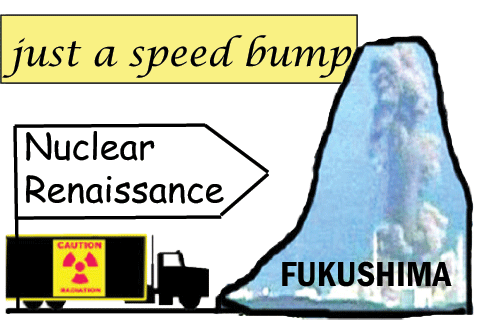
Saturday 9 March, 1 pm to 2.30 pm: Reflections of a Fukushima Farmer- the reality of nuclear meltdowns. Japanese for Peace invites you to bring a picnic lunch (or grab something at CERES), a rug/chair, and come and hear about the current situation for those affected by the catastrophic events two years ago. If you think you may come, please email  info@jfp.org.au to give us an idea of numbers. There will also be an optional tour of Ceres afterwards at 2.30 pm. CERES Community Environment Park,At the Village Green, Cnr Roberts and Stewart Streets, Brunswick East, Victoria (MELWAYS Map 30 B7)


Thursday 14 March, 6 pm to 7.30 pm: Will foreign investment alleviate poverty in Burma? Recent reforms have seen resource rich Burma become an investment haven. Despite serious questions about human rights impact of foreign investment projects, Australia's Foreign Minister Bob Carr has declared that foreign investment will alleviate poverty in Burma. But will it? Hear Naing Htoo (Earthrights International), Seng Maw (Kachin Association Australia) and U Shwe Thein (Land Core Group) answer the question: Will foreign investment alleviate poverty in Burma? Venue:  AMWU Building, 251 Queensberry St, Carlton South, 3053. For more information contact Burma Campaign Australia
on 02 9264 7694 or admin@aucampaignforburma.org.


Friday 15 March, 6.15 pm for 6.30 pm – 9.15 pm: Film Screening:  Rachel.  It was 10 years ago that Rachel was killed by an Israeli bulldozer as she tried to stop it crushing a Palestinian home. This is the story of her tragic death and the people she had come to love. State Library of Victoria, Conference Centre, Entry 2, La Trobe Street, Melbourne. Cost $15 plus booking fee $1.89. Book online: http://www.eventbrite.com.au/event/4361336876?ref=ebtnebtckt#

Saturday 16 March – Sunday 24 March: Cultural Diversity Week. 
For details, see: 


Tuesday 19 March: Following the US to War: Lessons from Iraq. Speakers will include Paul Barratt (Campaign for an Iraq War Inquiry); Dr Jenny Grounds(MAPW); Professor Richard Tanter; and Maki Yonaha (Japanese for Peace). Venue details soon!  For more read this. Facebook.


Wednesday 20 March & Thursday 21 March, 9 am – 5 pm, lunch and refreshments provided: Anti-racism Workshop.Refugees,Survivors and Ex-Detainees (RISE) is presenting a series of anti-racism workshops for organisations. The online registration form is up and running! Resisting Racism Victoria project, the first of its kind in Victoria, which will see the running of anti-racism workshops in 2013 for staff/volunteers of organisations that service communities of colour. Register online https://docs.google.com/a/riserefugee.org/forms/d/1lR0d5elFUl-zG_eNgMxin_J79thgPk-lY4pLh6xLFE8/viewform. Spaces filling fast! Find out more http://riserefugee.org/what-we-do/anti-racism. Watch the video: http://www.youtube.com/watch?v=J3HHEbT9djo.Please contact us at resistingracism@riserefugee.org if you have any questions. Later workshops 24 & 25 April, 22 & 23 May and 26 & 27 June. Melbourne CBD.


Friday March 29 to Sunday April 7:  Friends of the Earth's Radioactive Exposure Tour.  Register your interest now - places fill fast! These tours have exposed thousands of people first-hand to the realities of 'radioactive racism' and to the environmental impacts of the nuclear industry. After travelling from Melbourne to Adelaide we will head through Port Augusta and visit the Aboriginal Tent Embassy. Then we'll travel north to the SA desert, we'll visit BHP Billiton's Olympic Dam uranium mine at Roxby Downs, the largest uranium deposit in the world. While the expansion of Olympic Dam is currently shelved, the mine is still an environmental and social disaster in itself. The costs are: concession $500 ($450 from Adelaide); waged $750; solidarity $950. If cost is a barrier, contact the organisers to discuss funding ideas. If you're interested in joining in the 2013 Radioactive Exposure Tour, contact radexposuretour@gmail.com or call Gem on 0421 955 066. Information on Radioactive Exposure Tours in previous years is posted at www.foe.org.au/anti-nuclear/issues/oz/radtour


Friday 5 April and Monday 8 April: Advanced Community Development Course. Feel more confident in practicing community development in your workplace; Examine the issues, challenges and dilemmas of Community Development; Connect theory with practice; Hold conversations with decision makers and other Community Development workers; Access to further learning resources; Use the modes of head (intellect), heart (feelings), hands (practical work with people) and feet (groundedness); Think creatively about your organisational context; Interfacing with the wider context. Led by Jim Ife, Jacques Boulet and Rob Nabben. Contact: 9819 3239, 2 Minona St, Hawthorn, icd@borderlands.org.au. Cost: $350 full / $300 con. Both courses: $600. Bookings essential. 


Friday 19 April, 7 pm to 9 pm; Saturday 20 April – Sunday 21 April, 9 am to 5 pm: Biochar Workshop. As a soil additive, biochar offers numerous benefits. It increases the capacity for soil to hold water & nutrients, greatly reduce emissions of greenhouse gases, enhance crop yields and capture and store carbon for the long term. Learn to make and operate a simple biochar reactor; produce a range of different biochars at different temperatures; carry out basic tests on your biochars; make biochar/compost/mineral blends.  Faciltators: Prof Stephen Joseph, University of NSW, Paul Taylor PhD, Author of “The Biochar Revolution”, and Russell Burnet, Biochar Energy Systems. Workshop cost – includes lunch both days & Friday evening intro: $195 before 1st April; $250 regular price. Only $149 for extra family member or partner. Venue: Friday night: Bendigo Bank Theatre at The Capital, 50 View Street, Bendigo; Saturday & Sunday: A1203 Goornong-Mayreef Rd, Elmore. Website: http://kynetontransitionhub.com/home-4/biochar/biochar-workshop/ 
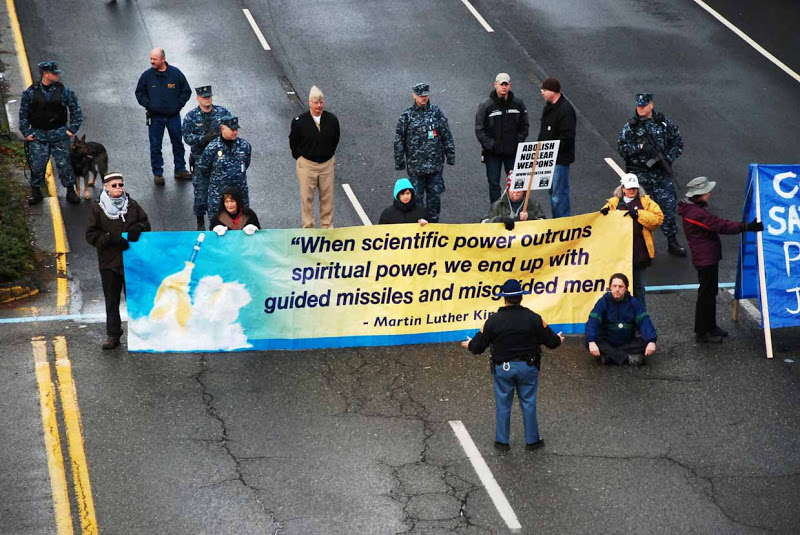
Sunday 21 April – Saturday 27 April: Nonviolent Action from the Strategic to the Prophetic. For young, emerging activists (18-30) who feel deeply that the present order with its emphasis on dominance and economic expansion is unsustainable, and are ready to develop commitment and skills in nonviolent ways to help promote change, this is an opportunity to learn from two very experienced activists, Margaret Pestorius and Simon Reeves.

This course is subsidized and a special application form must be used:
https://www.dropbox.com/s/jh2trfcr0dxyn5n/Nonviolent%20action%20%281%29.pdf.  The cost for full board & accommodation, plus materials, is $200. Participants will cover their own travel costs, to and from Silver Wattle Quaker Centre Ltd -1063 Lake Road, Bungendore NSW 2621 Ph: 02 6238 0588 

Saturday 4 May - Tuesday 28 May: The Walkatjurra Walkabout. The walk will continue to be a celebration of Wangkatja country, a testament to the strength of the community who have fought to stop uranium mining at Yeelirrie for over forty years, and a chance to come together and continue to share our commitment to a sustainable future without nuclear.  It is a chance to reconnect with the land, and to revive the tradition of walking for country. Register here to be a part of the walk:http://walkingforcountry.com/registration-to-walk-for-country/

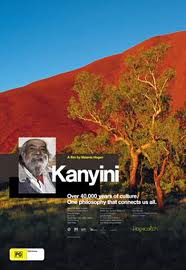
Sunday 12 May – Sunday 19 May: Kanyini Intensive (working with Uncle Bob Randall and his family). 7-day intensive (Sunday to Sunday, plus travel time) retreat located with in the Uluru National Park and surrounds in the Northern Territory. This is a unique opportunity to receive teachings from Bob Randall on the principles of Kanyini and Aboriginal culture. This will be a profound experience towards integrity in cultural counter-flows, a re-alignment of the importance of personal spirituality, and towards acknowledgment of 70,000 years of Aboriginal knowledge and traditions. Uncle Bob will share his wisdom and belief that spirituality is the ultimate answer to reconciliation in Australia. Uncle Bob will share his wisdom on aspects of Kanyini including, connections with the dreaming, place, family relationships and the spirit. Teaching Kanyini and sharing Aboriginal culture, knowledge and spirituality with all Australians and beyond, are an integral part of Bob's vision. Further information: email info@oases.edu.au or call 03 9819 3502.


Total Pageviews